"Did dinosaur mums give their babies food too?" your child asks in the middle of dinner, spoon still in hand.
Maiasaura was a duck-billed dinosaur that lived in the Late Cretaceous, in what is now Montana in the USA and Alberta in Canada. It was as long as a bus, and its name means "good mother lizard". It laid 30 to 40 eggs the size of ostrich eggs in one nest, and scientists think it looked after its babies by bringing them food. Below are the questions children ask most, with answers at a child's level. You can read them out loud.
Fact cardMaiasaura
- Name means
- good mother lizard
- Lived
- Late Cretaceous (about 80 to 75 million years ago)
- Length
- about 9 m (30 ft)
- Weight
- about 2.5 to 4 tonnes
- Food
- Plant-eater
- Found in
- North America (Montana in the USA, Alberta in Canada)
- Group
- Duck-billed dinosaurs and friends
- A small crest between its eyes
- A flat duck bill
- It looked after its babies in the nest
How big was Maiasaura? Measure it with your own height
When your child asks, answer like this
 What does Maiasaura mean?

How big was it?
What did it eat?
What did it do when a scary dinosaur came?
Who lived with it?
- Troodon predatorsame time and place
Troodon was a small, quick meat-eating dinosaur that nested in the same place. Some scientists now call it by another name. It probably went after eggs or newly hatched babies near the nests. - Daspletosaurus predatorsame time and place
Daspletosaurus was a big relative of Tyrannosaurus found in the same land in Montana. Sources differ on whether it lived at the same time as Maiasaura, so this is not certain, but a big meat-eating dinosaur like this may have gone after animals that fell behind the herd. - Orodromeus neighboursame time and place
Orodromeus was a small, fast plant-eating dinosaur neighbour that lived in the same place. It probably lived beside Maiasaura, eating low plants.
When and where did it live?
What was it like as a baby? Did it live with friends?
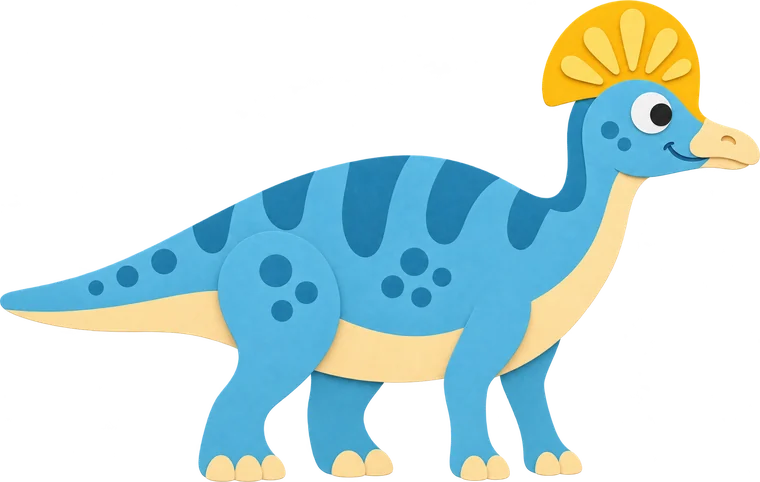
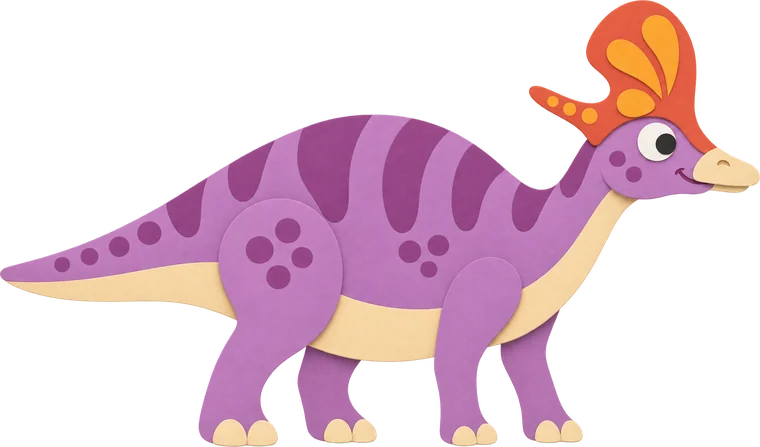
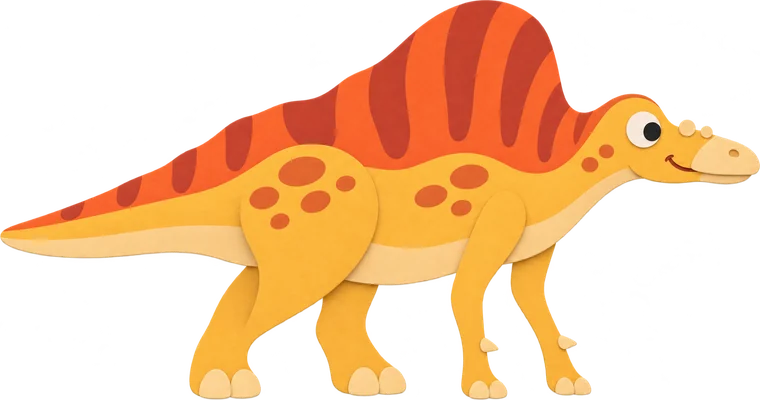
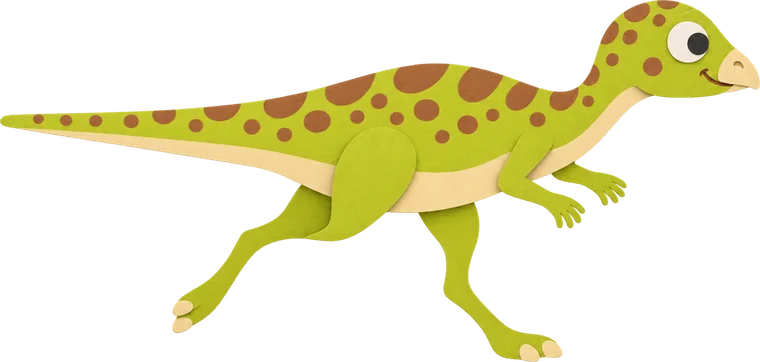
Are there dinosaurs that look like it?
Who found it first?
Maiasaura facts that make kids say “Wow!”
- Maiasaura laid its eggs in a nest, and scientists think it looked after its babies by bringing them food.
- Pieces of Maiasaura baby bone and eggshell rode into space on a spacecraft in 1985, so it became the first dinosaur to go to space.
- It probably did not sit on its eggs. The eggs were probably kept warm by the heat from plants rotting on top of the nest.
- So many bones were found in one place that scientists think it may have lived in huge herds of about ten thousand animals.
From head to tail
- A newly hatched baby was about 40 cm (16 in) long, the same as Dad's forearm.
- When it was young it walked mostly on two legs, and from about four years old it walked on four legs.
- Between its eyes it had a small, short crest that was solid all the way through.
- When fully grown it was 9 m (30 ft) long and as heavy as an elephant.
A Maiasaura story to read aloud
The nests of the Maiasaura mothers are gathered close together. Each nest is made of mud and is full of eggs the size of ostrich eggs. A baby that has just come out of its egg still has weak legs, so it stays in the nest. Mother tears off leaves and ferns and brings them to her baby. When Troodon, a small meat-eating dinosaur, comes snooping, the grown-ups stay close to the nests. The baby grows and grows and begins to toddle on two legs. Now it sets off with the big herd.
A quiz to do together
Tap an answer.
What does the name Maiasaura mean?
About how many eggs did Maiasaura lay in one nest?
How did a baby Maiasaura mostly walk?
You finished the quiz! Well done.
Colouring page
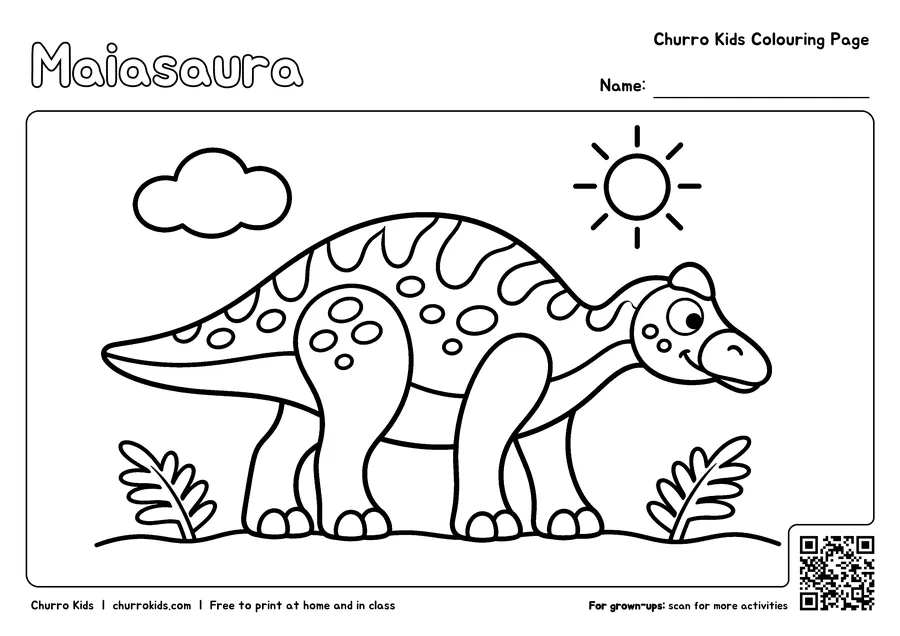
One A4 page, and it is free. Print it freely at home or in class.
Good for parents to know
- The idea that it cared for its babies comes from baby fossils found in the nests. They were newly hatched, yet their teeth were already worn and their legs were weak. It is strong evidence but still a reading of the fossils, so say "scientists think it looked after them."
- Sources give its weight as anything from about 2.5 to 4 tonnes. The dates for when it lived also differ between sources, and some give a much longer span than this guide.
- Troodon, listed here as a predator, is now called by another name by some scientists. Daspletosaurus comes from slightly later rock layers in the same land, so it is hard to say for certain that the two ever met.