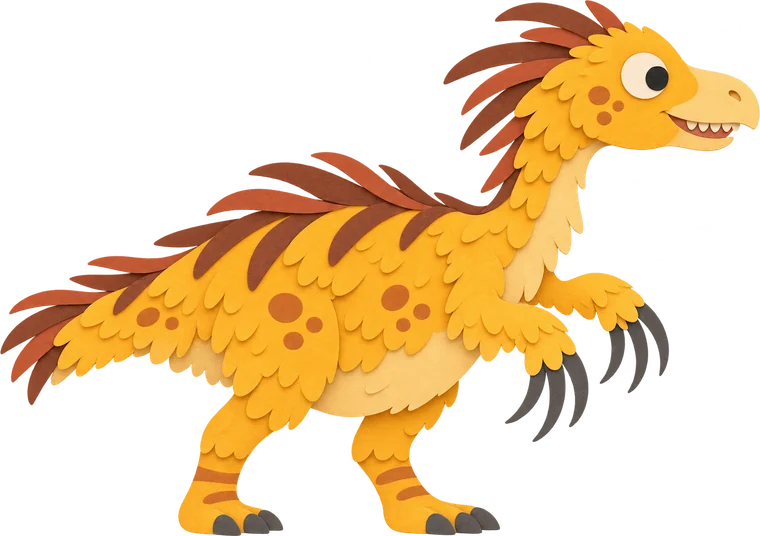
"Mum, is this a bird or a dinosaur?" Children often get puzzled in front of a picture of Gigantoraptor, with its beak and its long legs.
Gigantoraptor was a dinosaur that lived in the Late Cretaceous in what is now Inner Mongolia in China. It had a toothless beak like a bird's, but it was as long as a bus, and scientists think that with its head up it was about as tall as a giraffe. It snipped off the leaves and stems of plants, and now and then it may have eaten small animals too. Below are the questions children ask most, with answers at a child's level, and you can read them out loud as they are.
Fact cardGigantoraptor
- Name means
- giant thief
- Lived
- Late Cretaceous (about 96 million years ago)
- Length
- about 8 m (26 ft)
- Weight
- about 1.4 to 2 tonnes
- Food
- Eats plants and animals
- Found in
- Asia (Inner Mongolia, China)
- Group
- Dinosaurs of Korea and Asia
- A big beak with no teeth
- Very long legs
- A big body shaped like a bird's
How big was Gigantoraptor? Measure it with your own height
When your child asks, answer like this
 What does Gigantoraptor mean?

How big was it?
What did it eat?
What did it do when a scary dinosaur came?
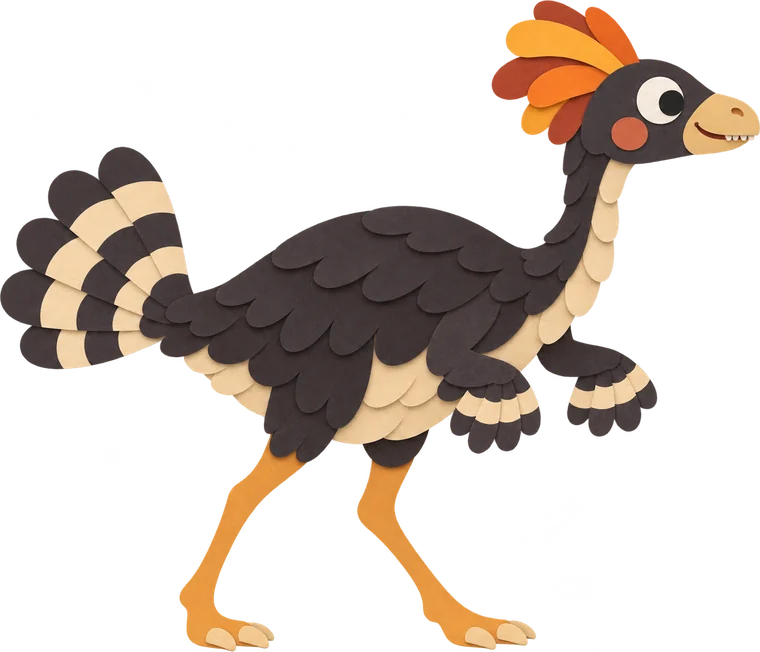
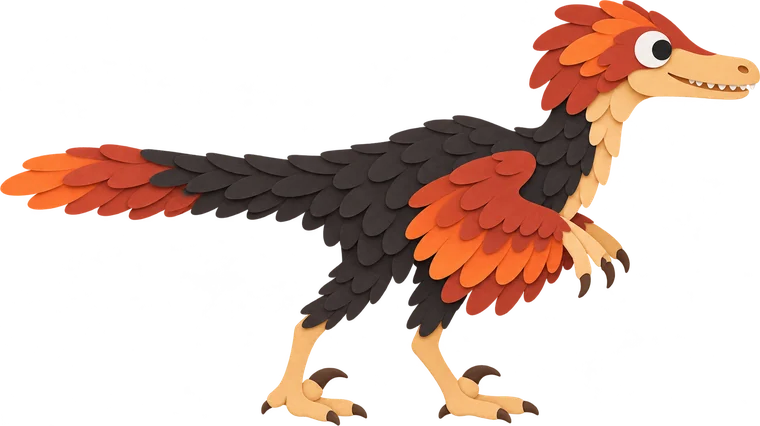
Who lived with it?
- Alectrosaurus predatorsame time and place
Alectrosaurus was a meat-eating dinosaur about 5 to 6 m (16 to 20 ft) long that lived on the same land in Inner Mongolia. It was smaller than a fully grown Gigantoraptor, so it probably went after the young ones. - Archaeornithomimus neighboursame time and place
Archaeornithomimus was a dinosaur that looked like an ostrich and lived in the same place. The two were probably neighbours that both strode across the plains on long legs. - Sonidosaurus neighboursame time and place
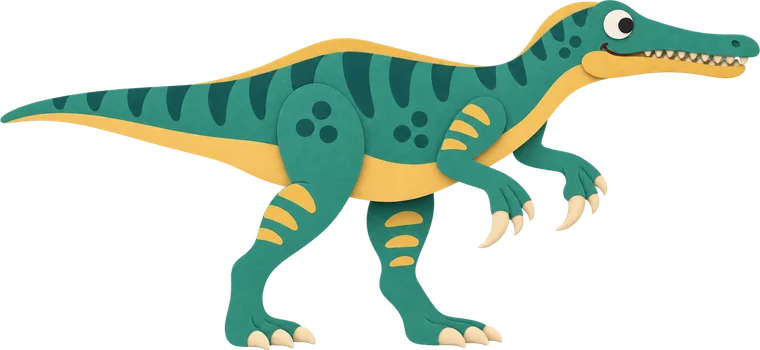
Sonidosaurus was a long-necked dinosaur found in the same place. It probably lived on the same riverside plains as Gigantoraptor.
When and where did it live?
What was it like as a baby? Did it live with friends?
Are there dinosaurs that look like it?
Who found it first?
Gigantoraptor facts that make kids say “Wow!”
- Gigantoraptor was a dinosaur with a beak like a bird's, and with its head up it was probably about as tall as a giraffe.
- Gigantoraptor is the biggest dinosaur of the Oviraptor group whose bones have been found.
- Eggs that seem to have been laid by big relatives like Gigantoraptor are long in shape and more than 40 cm (16 inches) long.
- It was so big that its whole body may not have been covered in feathers, but it probably had feathers on its arms.
From head to tail
- It was about 8 m (26 ft) long and weighed about 1.4 to 2 tonnes, heavier than a small car.
- Its thigh bone and its shin bone were each more than 1 m (3 ft) long.
- It was about 3.5 m (11.5 ft) tall at the hips alone, higher than a basketball hoop.
- Its lower jaw had no teeth at all, and it had a beak like a bird's.
A Gigantoraptor story to read aloud
Gigantoraptor strides across the plain beside a winding river. With its long legs, one step takes it a long way. It snips off leaves with its big toothless beak. Beside it, an Archaeornithomimus that looks like an ostrich is running about. Far away, the long-necked Sonidosaurus can be seen too. Even when Alectrosaurus shows up, Gigantoraptor is so big that it has nothing to worry about. It spreads the feathers on its arms wide and walks along the river again.
A quiz to do together
Tap an answer.
What was the mouth of Gigantoraptor like?
How was Gigantoraptor found?
Is Gigantoraptor bigger or smaller than its relative Oviraptor?
You finished the quiz! Well done.
Colouring page
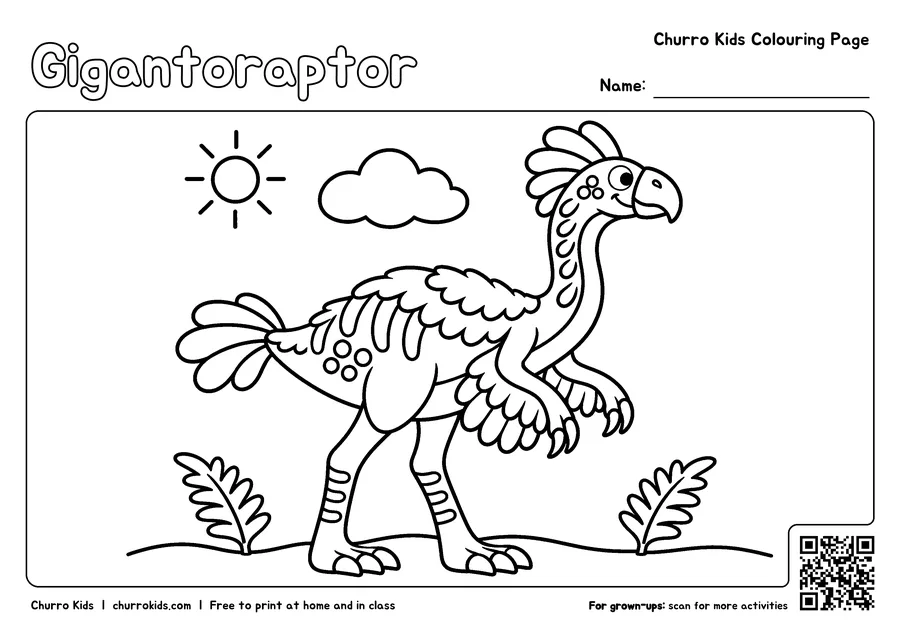
One A4 page, and it is free. Print it freely at home or in class.
Good for parents to know
- Only one skeleton has been found, and only part of it. The toothless lower jaw is there, but the rest of the skull is missing, so the shape of the head and any crest are guessed from related dinosaurs.
- No feather fossils have been found. From its relatives, scientists think it probably had feathers on its arms. There is also no fossil yet that shows what it ate.
- The published height is about 3.5 metres at the hips. Saying it was as tall as a giraffe is a rough estimate of how high its head was with the neck raised. One measurement dates it to about 96 million years ago, but some think it may have lived much later than that.