"Is Dreadnoughtus bigger than a bus?" your child asks, lining up toy buses in a row.
Dreadnoughtus was a long-necked plant-eating dinosaur that lived in the Late Cretaceous in what is now Argentina. It was longer than two buses in a row, and its neck alone was as long as one bus. Its body was so very big that it probably had nothing to be afraid of, so it was given a name that means "one that fears nothing". Below are the questions children ask most, with answers at a child's level. You can read them out loud.
Fact cardDreadnoughtus
- Name means
- one that fears nothing
- Lived
- Late Cretaceous (about 76 to 70 million years ago)
- Length
- about 26 m (85 ft)
- Weight
- about 22 to 59 tonnes
- Food
- Plant-eater
- Found in
- South America (Argentina)
- Group
- Dinosaurs from around the world
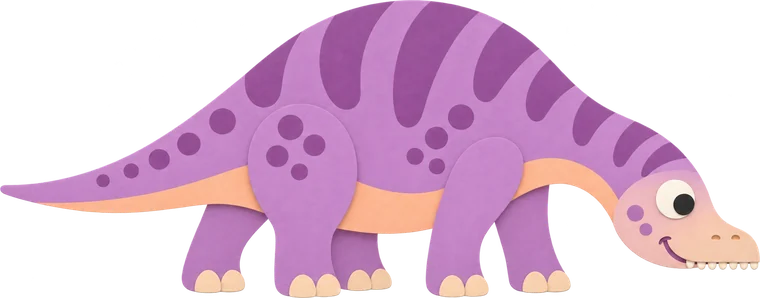
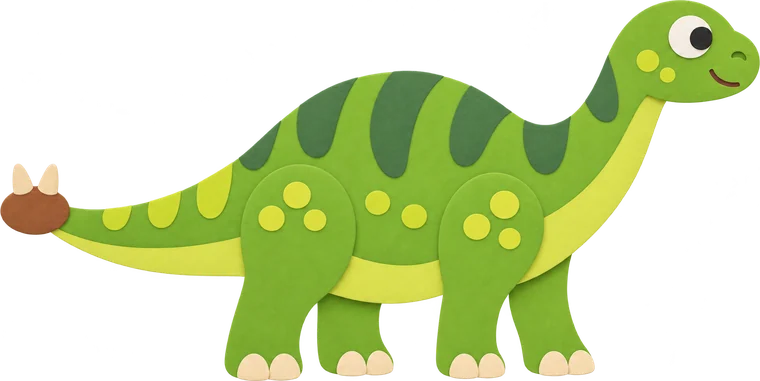
- A very, very long neck
- Four legs like pillars
- A long, thick tail
How big was Dreadnoughtus? Measure it with your own height
When your child asks, answer like this
 What does Dreadnoughtus mean?

How big was it?
What did it eat?
What did it do when a scary dinosaur came?
Who lived with it?
- Orkoraptor neighboursame time and place
Several teeth of a small meat-eating dinosaur were found among the bones of Dreadnoughtus. This does not look like a hunt. It looks as if a meat-eater fed on the body after the animal had died, and scientists say it may have been a meat-eater from the same land, such as Orkoraptor. - Talenkauen neighboursame time and place
Talenkauen was a much smaller plant-eating dinosaur that lived on the same land. It probably ate low plants beside the huge Dreadnoughtus.
When and where did it live?
What was it like as a baby? Did it live with friends?
Are there dinosaurs that look like it?
Who found it first?
Dreadnoughtus facts that make kids say “Wow!”
- Dreadnoughtus got its name because its body was so very big that it probably had nothing to be afraid of.
- Among the very biggest long-necked dinosaurs, it is one of those with the most bones left. About 70 percent of the kinds of bones in its body, not counting the head, have been found.
- The bones were kept well because a river bank broke and buried them in sand and mud in a moment.
- Scientists scanned the bones one by one with a laser and built a 3D skeleton inside a computer.
From head to tail
- Its neck alone was about 11.3 m (37 ft) long, as long as a bus.
- Its tail was about 8.7 m (29 ft) long.
- It stood about 6 m (20 ft) high at the shoulder, as high as the roof of a two-storey house.
- One shoulder blade was 1.74 m (5.7 ft) long, as long as a grown-up is tall.
A Dreadnoughtus story to read aloud
Dreadnoughtus stands tall on a plain where a river flows. It slowly stretches its neck, as long as a bus, to the left and to the right. It picks leaves and gulps them down without chewing. Its four legs, like pillars, hold up its heavy body. Down by its feet, a small plant-eater called Talenkauen is eating low plants. Dreadnoughtus swings its thick tail slowly and walks on along the river.
A quiz to do together
Tap an answer.
What does the name Dreadnoughtus mean?
What did Dreadnoughtus eat?
Which part of the body of Dreadnoughtus is very, very long?
You finished the quiz! Well done.
Colouring page
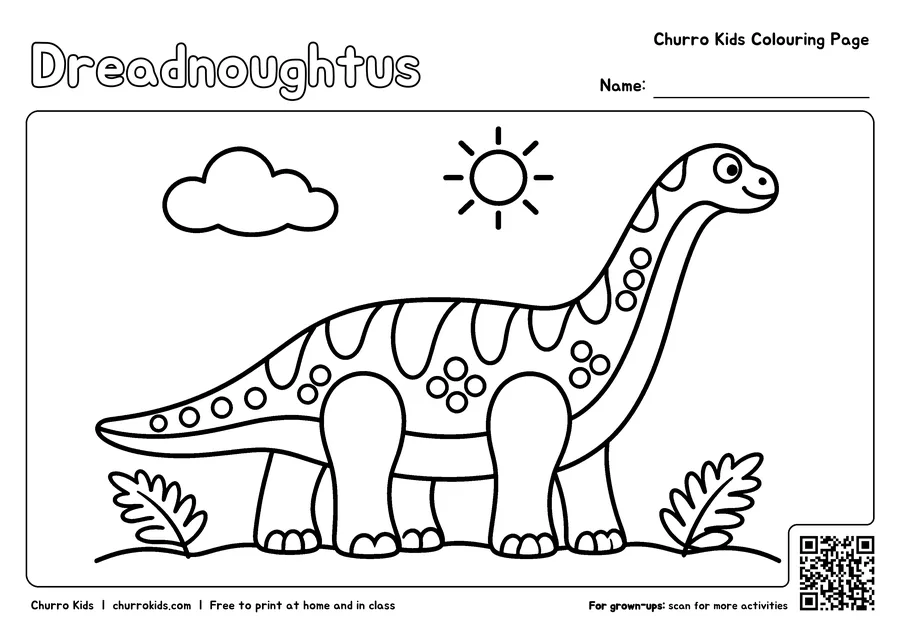
One A4 page, and it is free. Print it freely at home or in class.
Good for parents to know
- Its weight is strongly debated. It was first given as about 59 tonnes, later studies put it at 22 to 38 tonnes, and another calculation gave about 48 to 49 tonnes. This guide covers everything from the lightest to the heaviest calculation and says about 22 to 59 tonnes. For a child you can say "it was very, very heavy, and scientists are still working out exactly how many tonnes."
- The skeleton that was found is from a Dreadnoughtus that was not fully grown yet. The idea that it swung its tail to protect itself is only a guess about what it may have done.
- It is easy to mix up with Argentinosaurus. Argentinosaurus is thought to be bigger, but only a few of its bones have been found, and many more bones of Dreadnoughtus have been found.