Stories · Sea Friends · Sea animal
Lobster Facts for Kids: Why Are a Lobster's Teeth in Its Stomach?
· Churro Kids
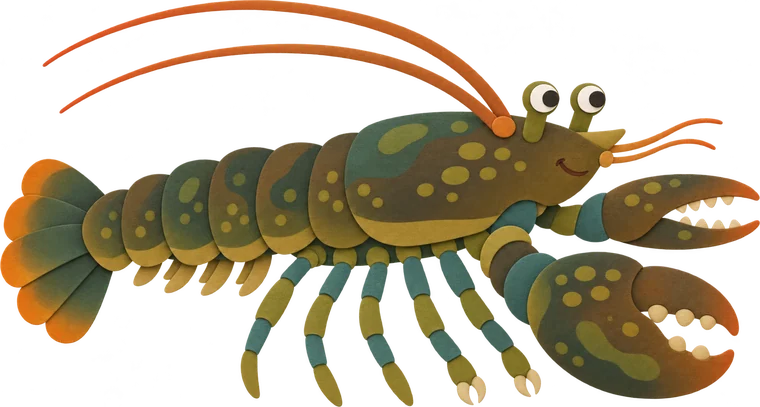
Watching a lobster plod across the aquarium floor, a child frowns: "In my book they're red. Why is that one green?"
A lobster is a crustacean with ten legs, the front two being big claws: one for crushing, one for cutting. Its teeth, surprisingly, are in its stomach. Live lobsters are greenish-blue or brown, and cooking reveals a red pigment hidden in the shell. Below are the questions children ask most, with answers at their level, ready to read aloud.
Fact cardLobster Sea animal · crustacean (an animal in a hard shell)
- Legs
- 10 (including 2 big claws)
- Length
- usually about 20-60 cm (8-24 in)
- Heaviest on record
- about 20 kg (44 lb)
- Live colour
- greenish-blue to brown
- Food
- shellfish, crabs, sea urchins, small fish
- Home
- rocky and muddy floors of the North Atlantic
- The big-clawed crustacean with teeth in its stomach
Lobster in a child's words
- A lobster is a crustacean, like crabs and shrimp. It has ten legs, and the front two are big claws.
- The two claws are different: the big one crushes shells like a hammer, and the smaller one cuts like a knife.
- A lobster usually walks forwards, but when startled it snaps its tail and shoots backwards.
- Its teeth are not in its mouth but in its stomach, where three hard grinders crush its food.
- A live lobster is greenish-blue or brown. Cooking brings out a red pigment hidden in the shell.
- Lobsters keep moulting and growing all their lives, so a very old lobster can become huge.
Lobster: measure it with your own height
When your child asks, answer like this
 Why are a lobster's claws different sizes?

Where are a lobster's teeth?
Are lobsters red?
Are there blue lobsters?
How does a lobster taste its food?
What colour is lobster blood?
How long do lobsters live?
Lobster facts that make kids say “Wow!”
- The heaviest lobster on record was caught off Nova Scotia, Canada, in 1977. It weighed about 20 kg (44 lb) and measured more than 1 m (3.5 ft) from tail fan to claw tip.
- A mother lobster carries from a few thousand to more than 100,000 eggs under her tail for about 9 months to a year.
- A lobster moults more than 20 times before it is grown up, and it can regrow a lost claw or leg over its next moults.
A quiz to do together
Tap an answer.
Where are a lobster's teeth?
What colour is a living lobster usually?
Which way does a startled lobster escape?
You finished the quiz! Well done.
Colouring page
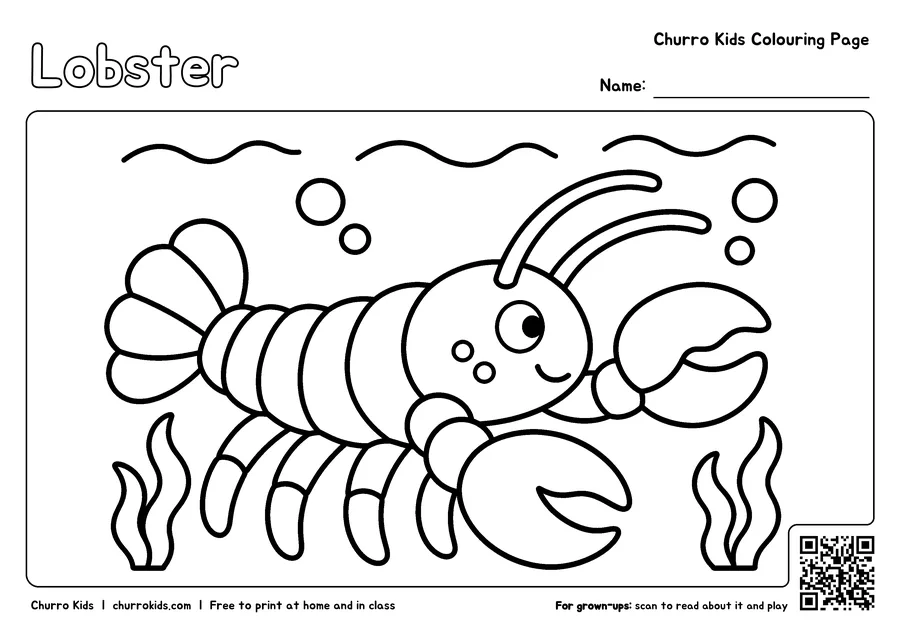
One A4 page, and it is free. Print it freely at home or in class.
Good for parents to know
- This page uses the American lobster as its example, the clawed lobster served in restaurants. It lives in the North Atlantic, not in Korean seas. Spiny lobsters, which have no big claws, share the English name but are a different group.
- "Lobsters don't age and could live forever" is a myth. They are long-lived and keep growing, but age is hard to measure, so "about 100 years" is an estimate, as is the age of the 1977 record animal (20.14 kg). "One in two million" for blue lobsters is a widely used rough figure; some experts think they are less rare.
- A live lobster's crusher claw pinches very hard. At a fish market or aquarium, keep little hands out of the tank.
Things to try together
- Turn two clothes pegs into claws, one broad and one pointed, and talk about what job each would do.
- Compare the colour of raw and cooked shrimp or crab, and talk about why lobsters turn red.
- Measure 60 cm with a tape and mark it on the floor: that is a big lobster. Compare it with your child's height.
Sources
- fisheries.noaa.gov/species/american-lobster
- fisheries.noaa.gov/national/outreach-and-education/fun-facts-about-luscious-lobsters
- nationalgeographic.com/animals/invertebrates/facts/american-lobster
- en.wikipedia.org/wiki/American_lobster
- guinnessworldrecords.com/world-records/70881-heaviest-marine-crustacean
- mentalfloss.com/animals/invertebrates/25-delicious-facts-about-lobsters
- mentalfloss.com/article/31483/why-do-crabs-and-lobsters-turn-red-when-you-cook-them
- popsci.com/environment/rare-blue-lobster-new-hampshire
- mainelobsternow.com/blogs/resources/maine-lobster-facts