Stories · Sea Friends · Sea animal
Great White Shark Facts for Kids: Why Do Shark Teeth Keep Growing Back?
· Churro Kids
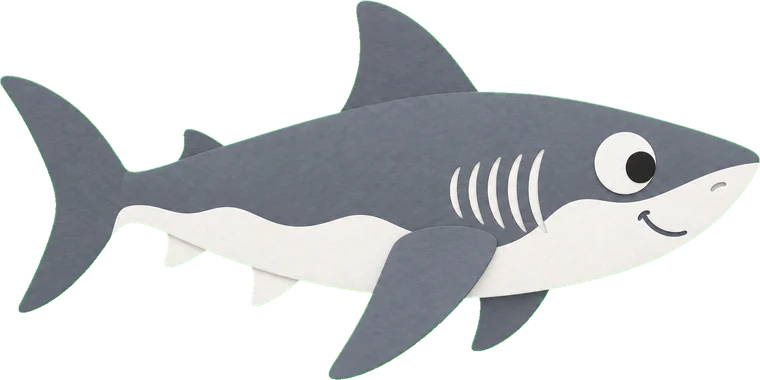
A child with a first wobbly tooth looks up from a shark book and asks, "What does a shark do when its tooth falls out?"
The great white is a large shark, about 4 to 5 metres (13-16 ft) long, with around 300 teeth that are replaced from the rows behind for its whole life. It hunts fish and seals, but it is not a "man-eater": people are not its food. Below are the questions children ask most, with answers pitched at their level. Feel free to read them aloud as they are.
Fact cardGreat White Shark Sea animal · shark
- Length
- about 4-5 m (13-16 ft); the largest about 6 m (20 ft)
- Weight
- around 1 tonne; large ones about 2 tonnes
- Food
- fish, squid, seals
- Teeth
- about 300, replaced all life long
- Lifespan
- 70 years or more
- Home
- temperate and subtropical seas worldwide
- The ocean hunter whose teeth grow back for life
Great White Shark in a child's words
- A grown great white is about 4 to 5 metres long (13-16 ft). The largest one measured reliably was about 6 metres (20 ft).
- Females are bigger than males. Adults usually weigh around 1 tonne and large ones about 2 tonnes, as much as one or two small cars.
- It has about 300 triangular teeth. When one falls out, a new tooth from the row behind moves forward.
- Although it is a fish, a great white can keep parts of its body warmer than the sea around it, which helps it swim strongly in cool water.
- Pups are born live, not hatched on the seabed, and are already about 1.2 to 1.5 metres (4-5 ft) long.
- Scientists think great whites live 70 years or more.
Great White Shark: measure it with your own height
When your child asks, answer like this
 How many teeth does a shark have?

Why do shark teeth keep growing back?
How big is a great white shark?
What does a great white eat?
Do sharks eat people?
Do sharks have bones?
Do baby sharks hatch from eggs?
Great White Shark facts that make kids say “Wow!”
- A great white is a fish that can keep its body warmer than the water. Very few fish can do that.
- A newborn pup, at about 1.2 to 1.5 metres, is already taller than a five-year-old child.
- Males are thought to become adults at about 26 and females at about 33. They grow up very slowly.
A quiz to do together
Tap an answer.
What happens when a great white loses a tooth?
How are great white pups born?
What is a shark's skeleton made of?
You finished the quiz! Well done.
Colouring page
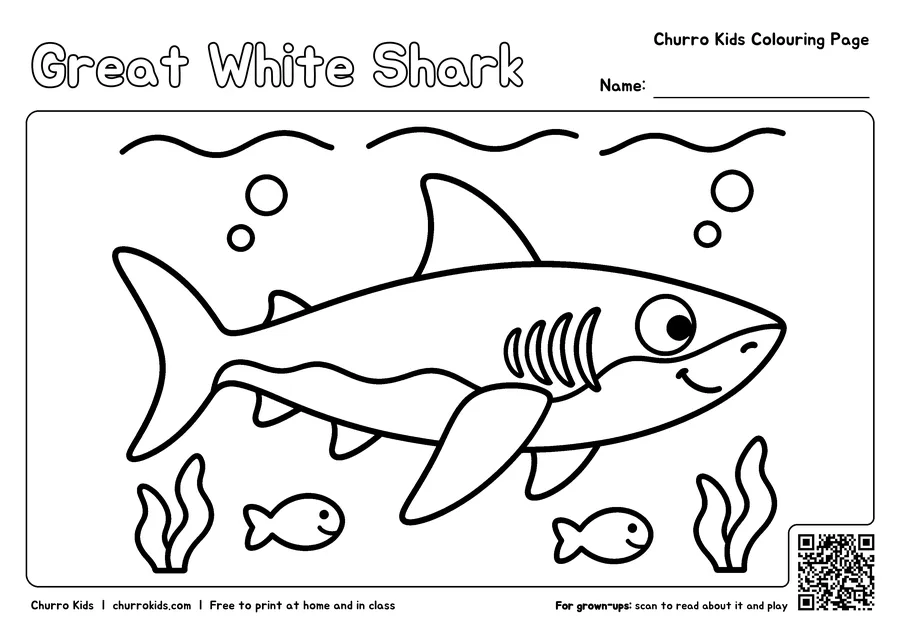
One A4 page, and it is free. Print it freely at home or in class.
Good for parents to know
- Sizes vary between sources. The largest reliably measured shark was about 6 metres; stories of 7 metres and more are unconfirmed. Speed figures range from about 25 km/h (15 mph) in tracking studies to nearly 50 km/h (about 30 mph) in popular references, so we left the number out of the children's text.
- The great white is not a "man-eater". Bites on people are very rare and people are not prey. It is nonetheless a large wild animal that can cause serious injury, so describe it as neither a monster nor a cuddly friend, but an animal to respect from a distance.
- Great whites are declining worldwide and are listed as Vulnerable by the IUCN. If your child is frightened, try turning it round: "Sharks need to be careful of people, too."
Things to try together
- Measure 4.5 metres on the floor and mark it with tape. Let your child lie beside it and count how many of them fit along one shark.
- Draw rows of triangle teeth. Rub out one front tooth and draw the one behind moving forward to take its place.
- Gently feel your ear and the tip of your nose. That bendy cartilage is what a shark's whole skeleton is made of.