Stories · Sea Friends · Sea animal
Bottlenose Dolphin Facts for Kids: How Do Dolphins Breathe While They Sleep?
· Churro Kids
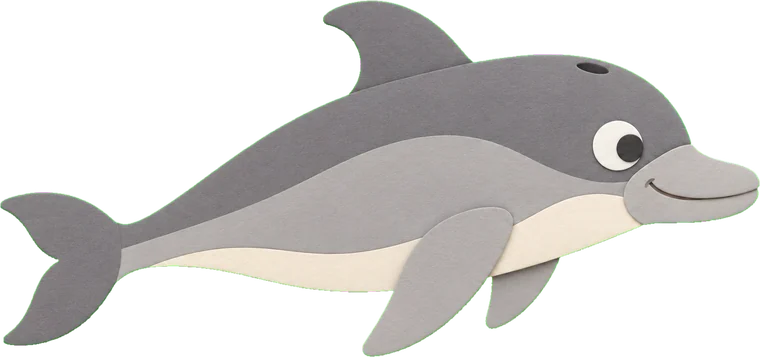
Tucked up in bed, a child pulls the blanket to their chin and asks, "If a dolphin sleeps underwater, how does it breathe?"
A dolphin is not a fish but an air-breathing mammal, so even asleep it rests one half of its brain at a time and keeps coming up for air. The bottlenose dolphin is about 2 to 4 metres (6.5-13 ft) long, and each one has its own whistle that works rather like a name. Below are the questions children ask most, with answers at their level, ready to read aloud.
Fact cardBottlenose Dolphin Sea animal · dolphin (mammal)
- Length
- about 2-4 m (6.5-13 ft)
- Weight
- about 150-650 kg (330-1,430 lb)
- Food
- fish, squid, shrimp
- Lifespan
- 40 years or more (some females over 60)
- Home
- warm and mild seas worldwide
- The sea friend that calls names by whistle
Bottlenose Dolphin in a child's words
- A bottlenose dolphin is about 2 to 4 metres long (6.5-13 ft); size varies a lot from one sea to another.
- A dolphin is not a fish. It breathes air as we do and feeds its baby on milk.
- It has a single blowhole on top of its head and comes to the surface to breathe through it.
- Every dolphin has its own signature whistle, a sound that works like a name.
- It makes clicking sounds and listens to the echoes to find food and its way around.
- A calf grows inside its mother for about 12 months and then stays close to her for three to six years.
Bottlenose Dolphin: measure it with your own height
When your child asks, answer like this
 Is a dolphin a fish?

How does a dolphin breathe?
How does a dolphin breathe while it sleeps?
How do dolphins talk to each other?
How fast can a dolphin swim?
What do dolphins eat?
Why is a dolphin always smiling?
Bottlenose Dolphin facts that make kids say “Wow!”
- A dolphin sleeps with half its brain at a time, and is said to switch sides about every two hours.
- Breathing is not automatic for a dolphin: it has to come up to the surface for each breath.
- A calf drinks its mother's milk for about a year and a half, then spends several more years learning from her.
A quiz to do together
Tap an answer.
What does a dolphin breathe through?
Which sound does a dolphin use like a name?
How does a dolphin sleep?
You finished the quiz! Well done.
Colouring page
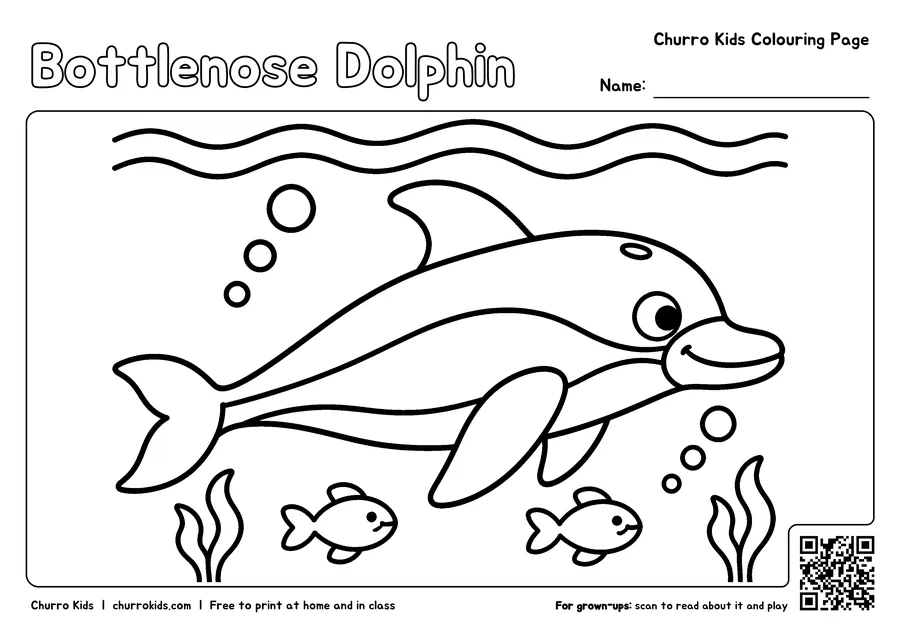
One A4 page, and it is free. Print it freely at home or in class.
Good for parents to know
- There are many kinds of dolphin; this page is about the common bottlenose. The dolphins seen around Jeju Island in Korea are mostly a close relative, the Indo-Pacific bottlenose dolphin, slightly smaller with a longer beak. About 120 are reported to live along the Jeju coast.
- Size ranges widely, from 2 to 4 metres depending on the region, and the often-quoted 30 km/h is a short burst rather than a cruising speed. Signature whistles are supported by playback experiments, though some researchers caution against treating them as exactly like human names.
- The dolphin's "smile" is not an expression. It is worth telling children that we watch wild dolphins from a distance, never feed them, and that the open sea is where they do best.
Things to try together
- Let everyone in the family pick their own whistle or short sound. Close your eyes and guess who is calling.
- Take a big breath and count how many seconds you can comfortably hold it (no straining). Talk about why a dolphin has to keep coming up for air.
- Mark 3 metres on the floor and let your child lie beside it to compare heights with a bottlenose dolphin.