Stories · Sea Friends · Sea animal
Blue Whale Facts for Kids: Is It Really Bigger Than a Dinosaur?
· Churro Kids
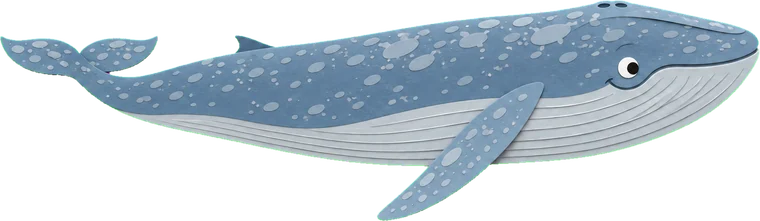
A dinosaur-mad child stares at a picture of a whale and asks, wide-eyed, "Is a whale bigger than a dinosaur?"
The blue whale is the largest animal known to have lived: about 25 to 30 metres (82-98 ft) long and well over 100 tonnes. Yet it eats finger-sized krill, and it is not a fish but a mammal that breathes air and feeds its calf on milk. Below are the questions children ask most, with answers at their level, ready to read aloud.
Fact cardBlue Whale Sea animal · whale (mammal)
- Length
- about 25-30 m (82-98 ft)
- Weight
- about 100-150 tonnes
- Food
- krill (small shrimp-like animals)
- Daily meal
- several tonnes of krill (about 4; one study says 16)
- Lifespan
- about 80-90 years
- Home
- every ocean except the Arctic
- The biggest animal on Earth
Blue Whale in a child's words
- The blue whale is the largest animal known to have lived, and it was probably heavier than even the biggest dinosaurs.
- It is about 25 to 30 metres long (82-98 ft), like two or three buses parked end to end.
- It weighs roughly 100 to 150 tonnes. The heaviest on record was about 190 tonnes.
- A blue whale has no teeth. Comb-like baleen plates in its mouth strain krill out of the seawater.
- Krill are small animals the size of a grown-up's little finger or smaller. A blue whale eats several tonnes of them a day; about 4 tonnes is the figure most often given.
- A blue whale is not a fish. It breathes air as we do and feeds its baby on milk.
Blue Whale: measure it with your own height
When your child asks, answer like this
 How big is a blue whale?

Is a blue whale bigger than a dinosaur?
What does something that big eat?
Is a whale a fish?
What is the spout a whale blows?
Is a baby blue whale big too?
What sound does a blue whale make?
Blue Whale facts that make kids say “Wow!”
- A blue whale's tongue is said to weigh about as much as an elephant.
- Its heart weighs about 180 kilograms (400 lb), the largest heart ever measured in an animal.
- A calf gains about 90 kilograms (200 lb) every day on its mother's milk.
A quiz to do together
Tap an answer.
Does a blue whale have teeth?
What does a blue whale eat?
How does a blue whale breathe?
You finished the quiz! Well done.
Colouring page
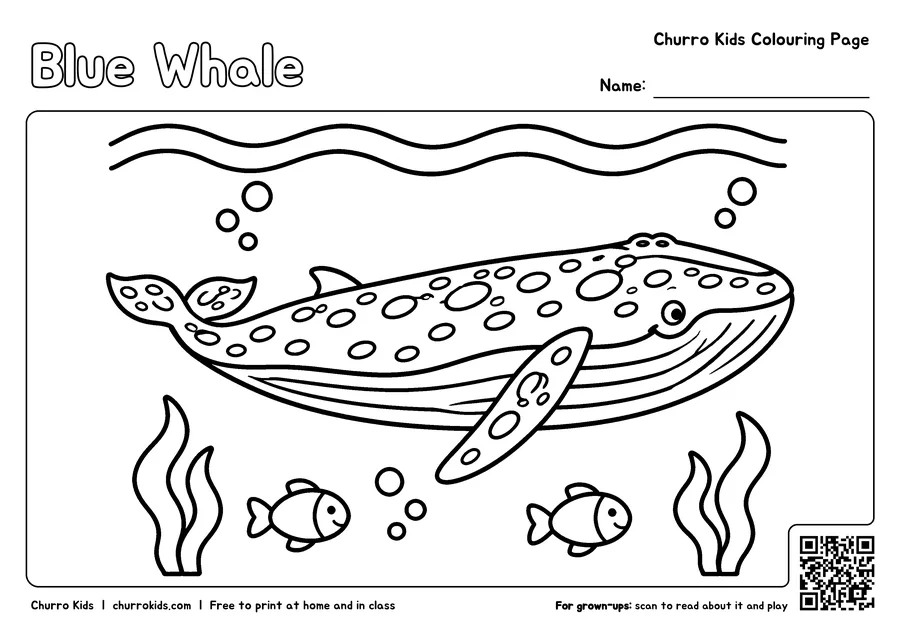
One A4 page, and it is free. Print it freely at home or in class.
Good for parents to know
- In Korean the animal has two names in books (대왕고래 and 흰긴수염고래); they are the same species. Sizes vary by source: reliably measured lengths go up to about 30 m, with an older record of 33 m. A whole whale cannot be weighed at sea, so most weights are estimates.
- "A heart the size of a car" and "arteries a person could swim through" are exaggerations. A heart that was actually measured weighed about 180 kg, closer to a fairground bumper car. Daily krill intake is given as about 4 tonnes by some sources and up to 6 tonnes for the largest whales by others, and a 2021 study put it at about 16 tonnes a day in the feeding season.
- Blue whales were hunted so heavily that their numbers collapsed; they are now endangered and protected worldwide, and slowly increasing. It is a hopeful story to share: when we protect animals, they can come back.
Things to try together
- In a big playground, take about thirty long steps. That is roughly one blue whale.
- Dip a comb in a bowl of water with a few small bits in it and lift it out. The water drains and the bits stay in the teeth of the comb: that is what baleen does.
- Weigh your child, then work out together how many family members add up to the 90 kilograms a calf gains in one day.