Stories · Earth & Weather · Weather
Lightning Facts for Kids: Why Does Lightning Flash and Thunder Come Later?
· Churro Kids
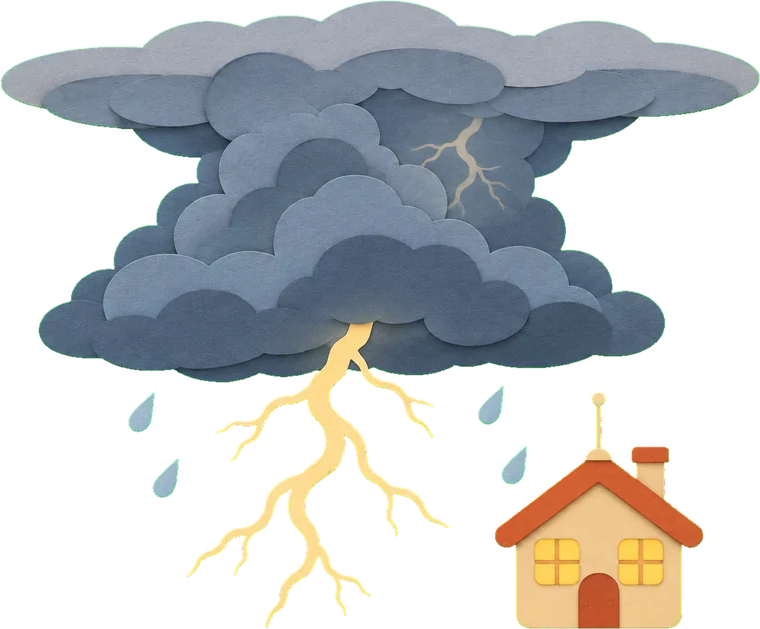
The sky flashes in the middle of the night and your child burrows under the blanket: "Why is there lightning? Will it come to our house?"
Lightning is the light made when electricity built up inside a storm cloud suddenly flows. It heats the air to about 28,000 °C (50,000 °F), and thunder is the sound of that air expanding. When you hear thunder, going indoors keeps you safe. Below are the questions children ask most, with answers you can read aloud.
Fact cardLightning Weather · electricity in the sky
- What it is
- electricity built up in a cloud suddenly flowing
- Temperature
- about 28,000 °C, roughly 5 times the Sun's surface
- Around the world
- about 44 flashes every second
- Thunder
- the sound of air heated by lightning
- Counting distance
- about 1 km for every 3 seconds
- A flash of electricity from inside a storm cloud
Lightning in a child's words
- Inside a big storm cloud, bits of ice bump into one another, and electricity builds up in the cloud.
- When too much has built up, it flows all at once. The flash of light is lightning.
- Lightning heats the air it passes through to about 28,000 °C (50,000 °F), roughly five times hotter than the surface of the Sun.
- The heated air expands so suddenly that it makes a loud sound. That sound is thunder.
- Light travels much faster than sound, so we see the flash first and hear the thunder later.
- If thunder arrives 3 seconds after the flash, the lightning was about 1 km away (5 seconds is about 1 mile).
- Around the whole Earth, lightning flashes about 44 times every second.
When your child asks, answer like this
 Why does lightning happen?

Why is thunder so loud?
Can we tell how far away lightning is?
What should we do when there is lightning?
Can lightning strike the same place twice?
Does lightning only come with rain?
Lightning facts that make kids say “Wow!”
- Far more lightning stays inside clouds or jumps between clouds than reaches the ground.
- Thunder can be heard up to about 16 km (10 miles) away.
- Lightning is much more common over land than over the sea: about nine flashes in ten happen over land.
A quiz to do together
Tap an answer.
Which reaches you first, the lightning flash or the thunder?
Where is it safe when you hear thunder?
Can lightning strike the same place twice?
You finished the quiz! Well done.
Colouring page
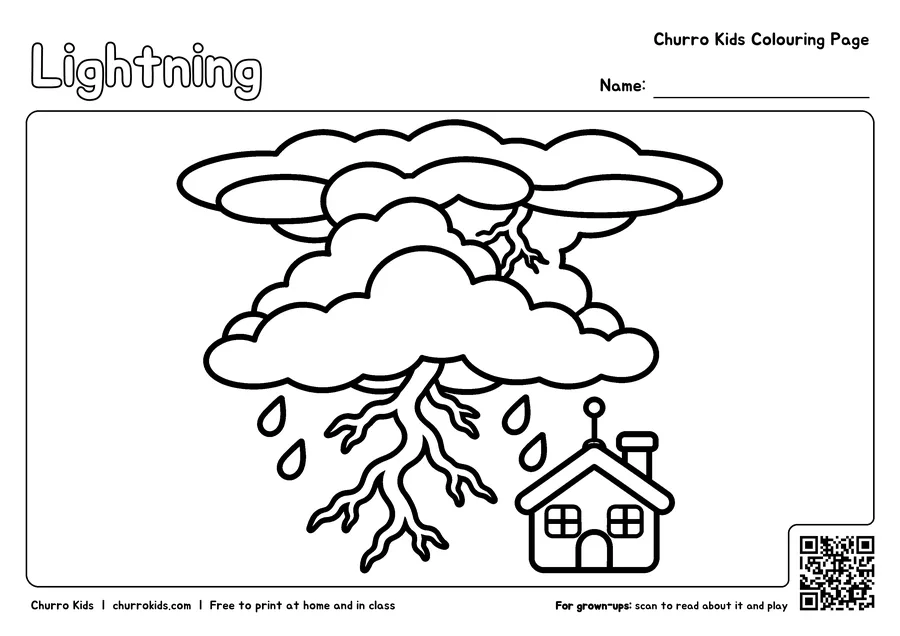
One A4 page, and it is free. Print it freely at home or in class.
Good for parents to know
- Korean official guidance is the 30-30 rule: if thunder follows the flash within 30 seconds, take shelter in a building or car straight away, and wait about 30 minutes after the last thunder before moving. The US National Weather Service says not to count at all: go in as soon as you hear any thunder. The page text keeps only what both agree on: at the sound of thunder go into a building or a hard-topped car with the windows shut, never shelter under a tall tree, and wait 30 minutes after the last thunder.
- Temperature figures vary: the US National Weather Service gives about 50,000 °F (28,000 °C), other references about 30,000 °C. The global rate of about 44 flashes a second is a satellite-based average and ranges from roughly 35 to 55 with the season.
- For a child who is afraid of thunder: thunder is only a sound and cannot hurt, and inside the house is safe. Counting the seconds together turns fear into curiosity.
Things to try together
- On a stormy day, sit indoors away from the window and count the seconds between flash and thunder together: about 3 seconds per kilometre.
- Rub a balloon on your hair and lift it slowly. The hair follows it. That is the same kind of electricity that makes lightning.
- Look for lightning rods on top of tall buildings in your neighbourhood.
Sources
- weather.gov/safety/lightning-science-thunder
- weather.gov/safety/lightning-science-overview
- weather.gov/safety/lightning-myths
- nssl.noaa.gov/education/svrwx101/lightning/faq/
- svs.gsfc.nasa.gov/hyperwall/index/data/events/2012/2012-ams/lightning.txt.html
- yeonsu.go.kr/safety/cyber/act/lightning_action.asp
- weather.go.kr/w/hazard/safety-guide/lightning.do
- weather.gov/safety/lightning-tips
- en.wikipedia.org/wiki/Lightning