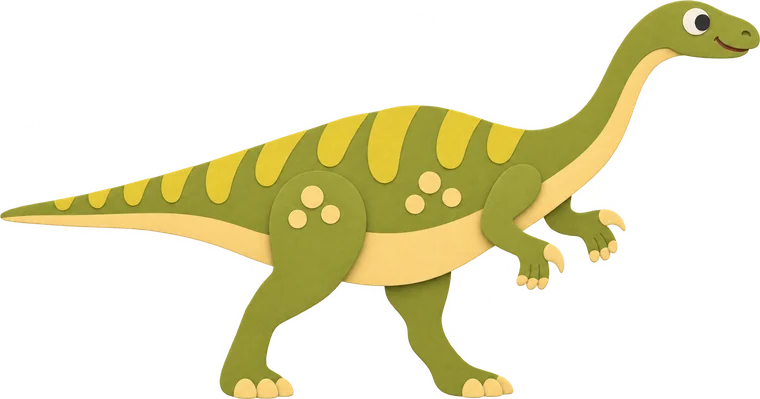
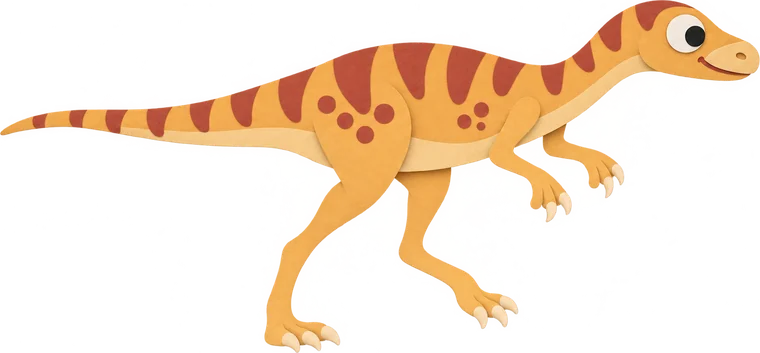
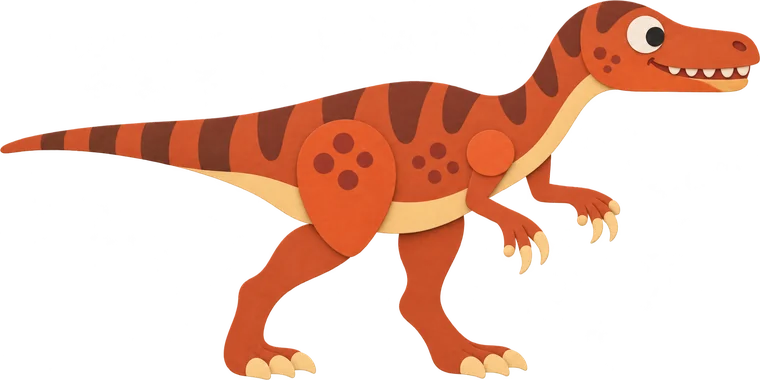
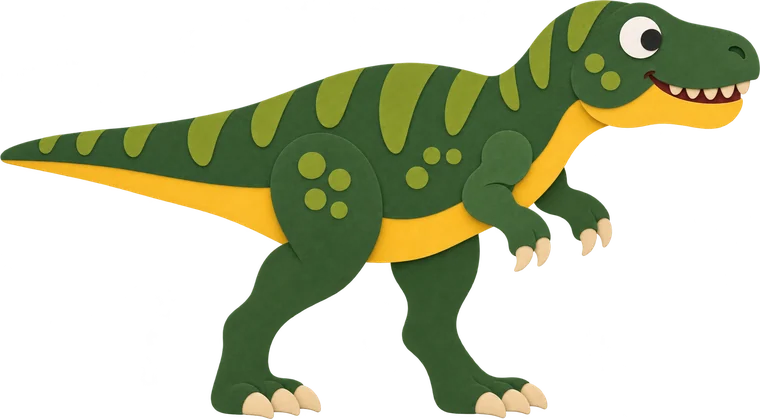
Brushing teeth in front of the mirror, your child asks, "Dad, did dinosaurs have front teeth and fangs and back teeth too?"
One dinosaur did. Heterodontosaurus lived in southern Africa in the Early Jurassic and, with its tail, was about as long as a big dog. It had teeth of three different shapes, like front teeth, fangs and back teeth, and it could grasp things with its long hands. Below are the questions children ask most, with answers at a child's level. You can read them out loud as they are.
Fact cardHeterodontosaurus
- Name means
- lizard with different teeth
- Lived
- Early Jurassic (about 200 to 190 million years ago)
- Length
- about 1.2 m (4 ft)
- Weight
- about 2 to 10 kg
- Food
- Plant-eater (may have eaten animals too)
- Found in
- Africa (South Africa; some sources also list Lesotho)
- Group
- Dome-headed and unusual dinosaurs
- Pointed fangs
- A small beak
- Long hands that could grasp things
How big was Heterodontosaurus? Measure it with your own height
When your child asks, answer like this
 What does Heterodontosaurus mean?

How big was it?
What did it eat?
What did it do when a scary dinosaur came?
Who lived with it?
- Massospondylus neighboursame time and place
The long-necked plant-eater Massospondylus lived in the same place. Massospondylus probably ate leaves high up, and Heterodontosaurus probably ate plants low down. - Lesothosaurus rivalsame time and place
Lesothosaurus, a small plant-eating dinosaur of about the same size, was a neighbour too. The two probably competed for the low plants. - Megapnosaurus predatorsame time and place
Megapnosaurus, a slim and fast meat-eating dinosaur, lived in southern Africa at the same time. Heterodontosaurus probably ran away to keep clear of it.
When and where did it live?
What was it like as a baby? Did it live with friends?
Are there dinosaurs that look like it?
Who found it first?
Heterodontosaurus facts that make kids say “Wow!”
- Heterodontosaurus had teeth of three different shapes, like front teeth, fangs and back teeth.
- It lived about 200 million years ago, more than 100 million years before Tyrannosaurus.
- Its teeth did not keep growing in new all its life. They changed only now and then.
- In 2016 scientists studied it by looking inside the fossil with very strong X-rays.
From head to tail
- Its skull was about 11 to 12 cm (about 4.5 inches) long, smaller than a grown-up's palm.
- Further back in the upper jaw it had 11 chisel-shaped back teeth on each side.
- It had five fingers, and three of them had big, strong claws.
- Each back foot had four toes, but the first toe did not touch the ground.
A Heterodontosaurus story to read aloud
Morning breaks over the hot, dry land. Little Heterodontosaurus trots out on its two legs. It nips off tough plants with its beak and chews them well with its back teeth. It digs in the ground with its strong hands and eats roots too. Over there, a long-necked Massospondylus is eating leaves high up. When a quick Megapnosaurus appears, Heterodontosaurus darts away on its long, thin back legs.
A quiz to do together
Tap an answer.
What stands out most in the mouth of Heterodontosaurus?
How many fingers did Heterodontosaurus have on each hand?
On which continent were the fossils of Heterodontosaurus found?
You finished the quiz! Well done.
Colouring page
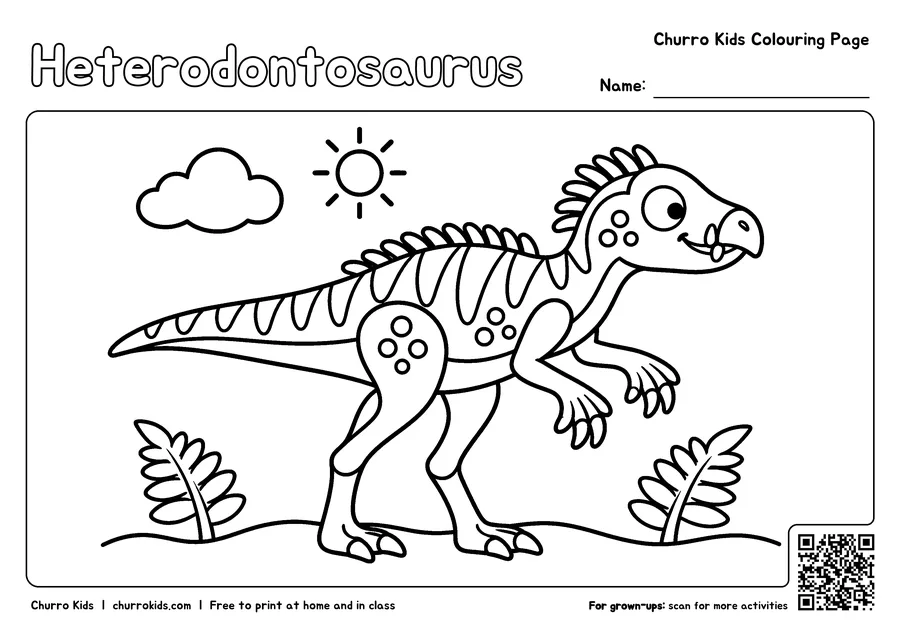
One A4 page, and it is free. Print it freely at home or in class.
Good for parents to know
- Whether it ate only plants or small animals too is still debated. What the fangs were for is also unclear, so it is best to say "it may have used them to scare others off."
- The length of 1.2 metres is the size of the best skeleton. Going by a larger skull, it may have grown to about 1.75 metres.
- Pictures with stiff bristles along the back are based on a related dinosaur, Tianyulong. The countries where it was found also differ by source: some list only South Africa and some add Lesotho.