Some dinosaur names are so long that both child and parent stumble over them a few times. "Carcharodontosaurus! Mum, what does that mean?" It means "shark-toothed lizard".
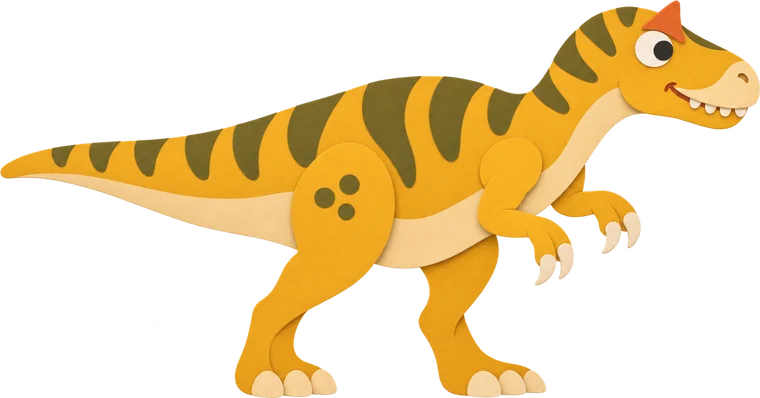
Carcharodontosaurus was a big meat-eating dinosaur that lived in North Africa in the Late Cretaceous. It was as long as a bus, and its teeth had saw edges like the teeth of a shark. It lived in the same place as Spinosaurus, the dinosaur with a sail. Below are the questions children ask most, with answers at a child's level. You can read them out loud as they are.
Fact cardCarcharodontosaurus
- Name means
- shark-toothed lizard
- Lived
- Late Cretaceous (about 100 to 94 million years ago)
- Length
- about 12 m (39 ft)
- Weight
- about 5 to 7 tonnes
- Food
- Meat-eater
- Found in
- North Africa (Morocco, Algeria and other places)
- Group
- Big meat-eating dinosaurs
- Saw-edged teeth like a shark's
- A long, triangle-shaped head
- Arms with three fingers
Watch the video
Hana asks and Churro explains all about Carcharodontosaurus. The video is in Korean; the facts below are the same ones.
How big was Carcharodontosaurus? Measure it with your own height
When your child asks, answer like this
 What does Carcharodontosaurus mean?

How big was it?
What did it eat?
How did it hunt?
Who lived with it?
- Rebbachisaurus preysame time and place
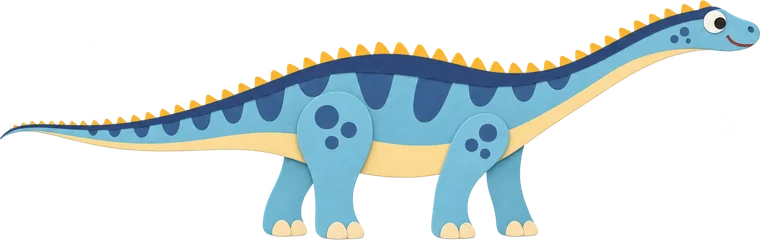
Rebbachisaurus, a long-necked plant-eater, lived beside the same rivers. Carcharodontosaurus probably hunted Rebbachisaurus. - Spinosaurus neighboursame time and place
Spinosaurus, the dinosaur with a sail, lived in the same place. Spinosaurus ate mostly fish and Carcharodontosaurus ate mostly dinosaurs on land, so they probably did not compete much. - Deltadromeus rivalsame time and place
Deltadromeus, a quick dinosaur with long legs, lived on the same land. Its skull has not been found, so we do not really know what it ate, but the two may have competed for food.
When and where did it live?
What was it like as a baby? Did it live with friends?
Are there dinosaurs that look like it?
Who found it first?
Carcharodontosaurus facts that make kids say “Wow!”
- Carcharodontosaurus got its name because its teeth had saw edges, like the teeth of a shark.
- The "Carcharodon" in its name comes from the scientific name for the great white shark.
- One study says its jaws could lift prey that weighed more than 400 kg (about 880 lb).
- A skeleton found in Egypt used to be called Carcharodontosaurus. In 2025 it turned out to be a different dinosaur and was given a new name.
From head to tail
- Its skull was about 1.6 m (5.2 ft) long, about as tall as a grown-up.
- Just the part of a tooth that showed above the gum was more than 6 cm (2.4 inches) long.
- The edge of each tooth had 18 to 20 tiny saw points in every 1 cm (0.4 inch).
- It probably had about 60 teeth in its mouth.
A Carcharodontosaurus story to read aloud
A warm wind blows through the forest beside the big river. Carcharodontosaurus stands very still among the trees. Its long, triangle-shaped head holds rows of saw-edged teeth like a shark's. In the river, a Spinosaurus is catching fish. Carcharodontosaurus is not interested in fish. Over there, a long-necked Rebbachisaurus comes walking slowly. Carcharodontosaurus keeps very quiet and waits.
A quiz to do together
Tap an answer.
The teeth of Carcharodontosaurus look like the teeth of which animal?
Where were Carcharodontosaurus fossils found?
Which dinosaur with a sail lived in the same place as Carcharodontosaurus?
You finished the quiz! Well done.
Colouring page
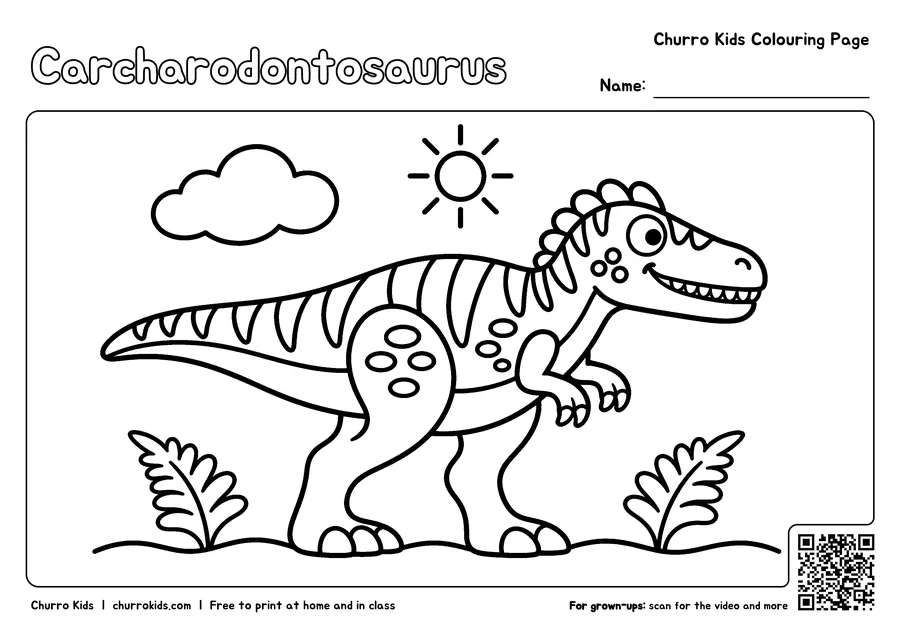
One A4 page, and it is free. Print it freely at home or in class.
Good for parents to know
- Only a skull and a few pieces of bone have been found, so the shape of its body and its three fingers are rebuilt from its relatives. Its eggs, its babies and whether it lived in groups are still unknown.
- A skeleton found in Egypt that used to be called Carcharodontosaurus turned out in 2025 to be a different dinosaur and was given a new name. The fossils from Niger probably belong to a different dinosaur too. So this guide lists Morocco, Algeria and other places as where it was found, and older books may say something different.
- The ideas that it hunted Rebbachisaurus and that it did not compete much with Spinosaurus are guesses based on the fact that they lived at the same time and in the same place. With your child, say "probably".