Stories · Bug Friends · Insect
Honeybee Facts for Kids: Why Do Bees Dance, and Why Do They Sting?
· Churro Kids
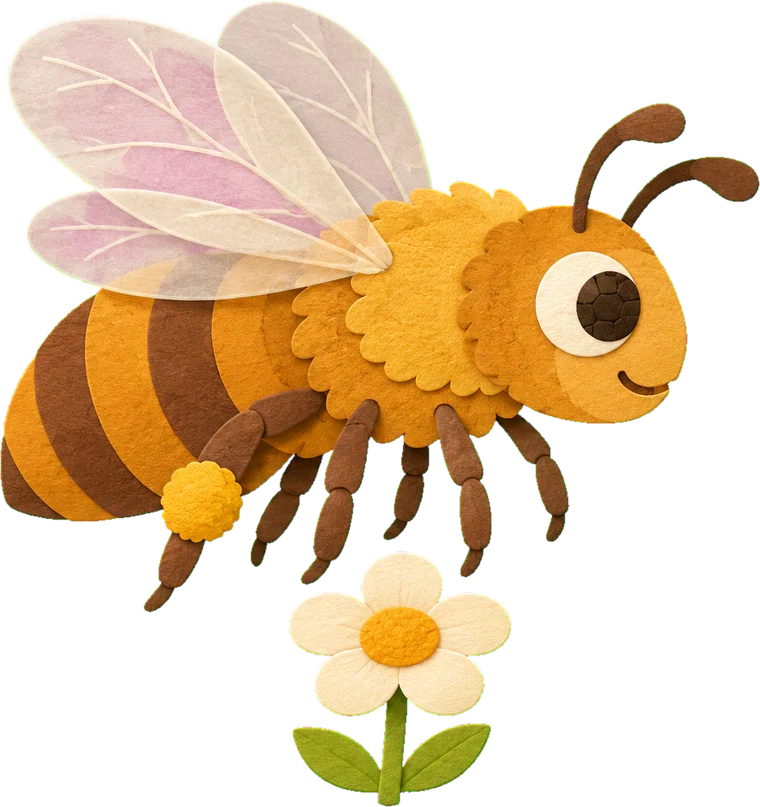
Your child spots a bee among the flowers, hides behind you and asks, "Why do bees sting? And how do they make honey?"
Honeybees are hard-working collectors of nectar and pollen. One hive holds a single queen and 20,000 to 60,000 workers, and a worker who finds good flowers tells the others with a dance. Bees sting only to defend the hive, so a child who stays still is almost always left alone. Below are the questions children ask most, with answers you can read aloud.
Fact cardHoneybee Insect · bee
- Length
- worker about 1-1.5 cm
- Food
- nectar and pollen
- Family
- 20,000-60,000 bees in one hive
- Eyes
- 5 (2 compound, 3 simple)
- Wingbeats
- about 230 a second
- Worker lifespan
- about 6 weeks in summer
- The busy friend who dances to show the way to flowers
Honeybee in a child's words
- Honeybees gather sweet nectar and pollen from flowers and carry them home.
- One hive holds one queen and 20,000 to 60,000 workers.
- The queen is the mother who lays the eggs, as many as about 2,000 a day in summer.
- All workers are female, and a worker born in summer lives for about six weeks.
- A worker that finds flowers comes home and does a waggle dance that shows the direction and the distance.
- By carrying pollen from flower to flower, honeybees help plants make fruit and seeds.
- A honeybee beats its wings about 230 times a second, which makes the buzz.
Honeybee: measure it with your own height
When your child asks, answer like this
 How do bees make honey?

Why do honeybees dance?
Why do honeybees sting?
What should I do if a bee comes close?
What does the queen bee do?
What do honeybees do in winter?
Honeybee facts that make kids say “Wow!”
- One worker is said to make only about a twelfth of a teaspoon of honey in her whole life.
- On a single trip a worker may visit 50 to 100 flowers.
- A honeybee has five eyes: two big compound eyes and three small simple eyes on top of its head.
A quiz to do together
Tap an answer.
How do honeybees tell each other where the flowers are?
Which bee lays the eggs in the hive?
What should you do when a bee comes close?
You finished the quiz! Well done.
Colouring page
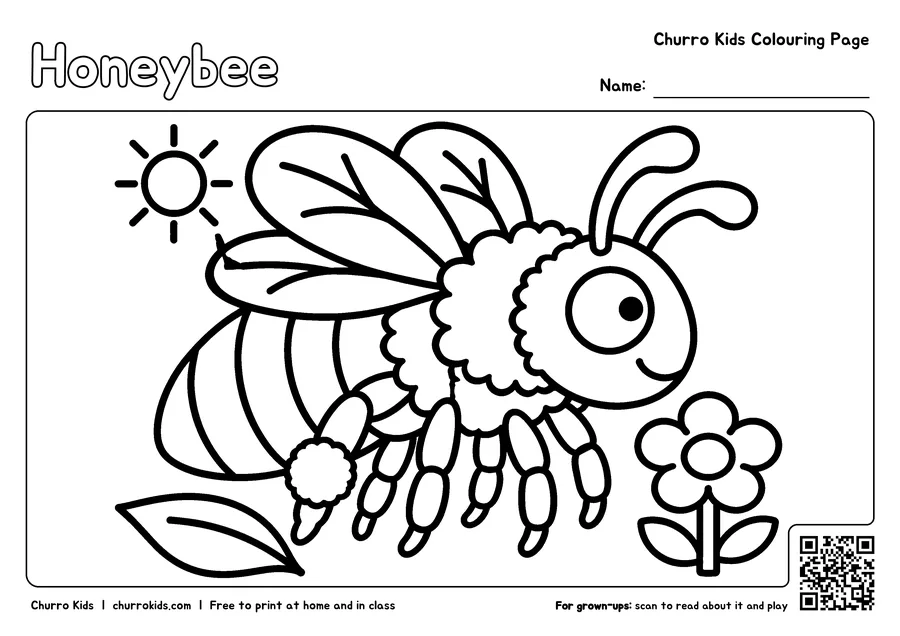
One A4 page, and it is free. Print it freely at home or in class.
Good for parents to know
- The numbers here are for the western honeybee (Apis mellifera), the species most often kept for honey. Colony size changes with the season (some sources give up to 80,000 in midsummer), and peak egg-laying is quoted anywhere from 1,500 to 2,500 a day.
- 'A twelfth of a teaspoon' is a widely used rule of thumb, not a precise measurement. 'It dies after stinging' is true of honeybee workers stinging people; wasps and hornets can sting more than once.
- After a sting, remove any stinger left in the skin quickly, rinse with clean water and cool the spot. Call emergency services at once (119 in Korea) if there is trouble breathing, swelling of the lips or throat, or hives all over the body. Keep away from nests and report them. If a nest is disturbed and bees swarm out, do not lie down: cover your head and move quickly to a place about 20 m away. Do not give honey to babies under one year old.
Things to try together
- Watch a honeybee on a flower from two or three steps away and look for the yellow pollen balls on its back legs.
- Hide a paper flower in the living room and show where it is with a waggle dance.
- Draw six-sided cells joined together to make a honeycomb.
Sources
- en.wikipedia.org/wiki/Western_honey_bee
- en.wikipedia.org/wiki/Honey_bee
- kids.nationalgeographic.com/animals/invertebrates/facts/honeybee
- pollinatorpartners.ksdot.gov/BusyBee
- ucanr.edu/blog/bug-squad/article/why-do-honey-bees-die-when-they-sting
- caltech.edu/news/deciphering-mystery-bee-flight-1075
- m.korea.kr/news/policyNewsView.do?newsId=148905116
- kukinews.com/article/view/kuk202408130132
- newsis.com/view/NISX20240131_0002611837