Stories · Bug Friends · Insect
Dragonfly Facts for Kids: Why Are a Dragonfly's Eyes So Big?
· Churro Kids
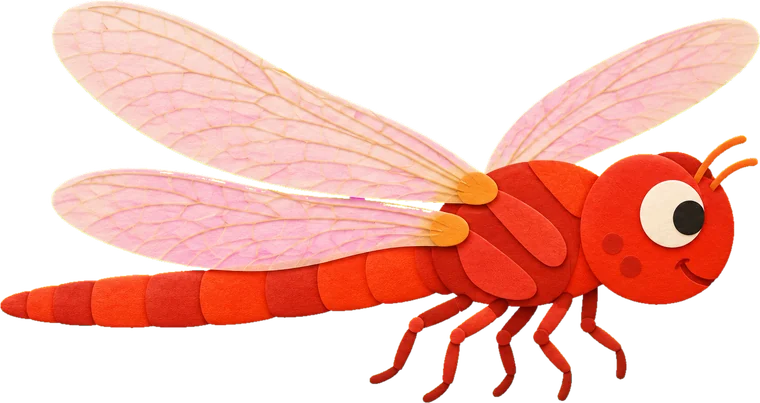
A dragonfly lands on your child's fingertip. Holding very still, your child whispers, "Why are its eyes so big? Can it see me?"
Dragonflies are superb fliers: four wings that move separately let them fly forwards and backwards and hover on the spot. Their huge compound eyes pick out the small insects they catch in the air. The young live under water before climbing a stem to become adults. Below are the questions children ask most, with answers you can read aloud.
Fact cardDragonfly Insect · dragonfly
- Length
- about 4-5 cm (scarlet skimmer)
- Food
- small insects such as mosquitoes and flies
- Wings
- 4
- Eyes
- compound eyes with over 20,000 lenses
- Young live
- under water
- Kinds
- about 3,000 species
- The sky pilot that can fly forwards, backwards and hover
Dragonfly in a child's words
- A dragonfly moves its four wings separately, so it can fly forwards, backwards, up and down, and hover in one place.
- Its big eyes are compound eyes made of many tiny lenses: more than 20,000 in each eye of a large dragonfly.
- Dragonflies catch small insects such as mosquitoes and flies while flying.
- Young dragonflies, called nymphs, live under water and eat small water creatures.
- A nymph sheds its skin many times, then climbs a plant stem out of the water, sheds one last time and becomes a dragonfly.
- Dragonflies have no pupa stage: they go from egg to nymph to adult.
- The red scarlet skimmer seen in Korean summers is about 4-5 cm (1.6-2 in) long, and only grown males are red all over.
Dragonfly: measure it with your own height
When your child asks, answer like this
 Why are a dragonfly's eyes so big?

What do dragonflies eat?
Where do baby dragonflies live?
Do dragonflies bite or sting people?
Why is the scarlet skimmer red?
How fast can a dragonfly fly?
Why does a dragonfly tap the water with its tail?
Dragonfly facts that make kids say “Wow!”
- Long before the dinosaurs, a giant relative of dragonflies had a wingspan of about 70 cm (over 2 ft).
- Dragonflies cannot really walk. They use their legs mainly to perch and to catch food.
- The wandering glider, which gathers in swarms in summer and autumn, is thought to travel thousands of kilometres across the sea.
A quiz to do together
Tap an answer.
Where do young dragonflies live?
How many wings does a dragonfly have?
Can a dragonfly sting a person?
You finished the quiz! Well done.
Colouring page
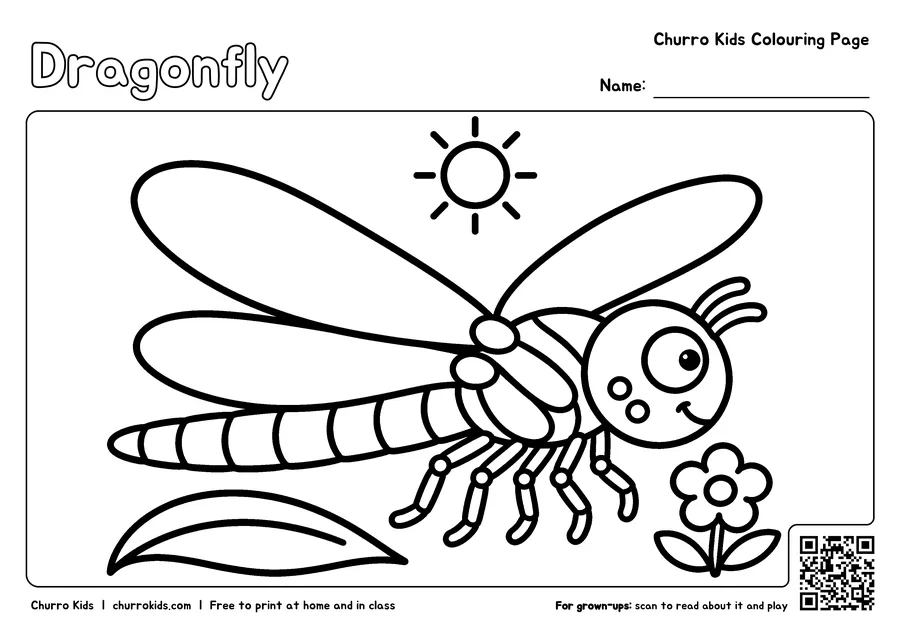
One A4 page, and it is free. Print it freely at home or in class.
Good for parents to know
- Speed figures vary: many sources give 36-54 km/h for large species, one museum page says about 70 km/h, and the old 97 km/h record is considered unreliable. The famous 95% hunting success comes from an experiment on one species.
- Time under water (a few months to about five years) and the number of moults (roughly 6 to 15, depending on the source) vary with the species. There are about 3,000 kinds of dragonfly, or about 6,000 if damselflies are included.
- Most red dragonflies seen in Korea in autumn are darters (Sympetrum), a different group from the scarlet skimmer. If your child catches one, hold all four wings together gently, look briefly, and let it go.
Things to try together
- Watch how a resting insect holds its wings: spread out to the sides means dragonfly, folded over the back means damselfly.
- In summer, look on plant stems beside a pond for the empty skins nymphs leave behind.
- Hold your arms out and fly like a dragonfly: forwards, stop and hover, then backwards.