Stories · Sea Friends · Sea animal
Clownfish Facts for Kids: Why Doesn't the Anemone Sting the Clownfish?
· Churro Kids
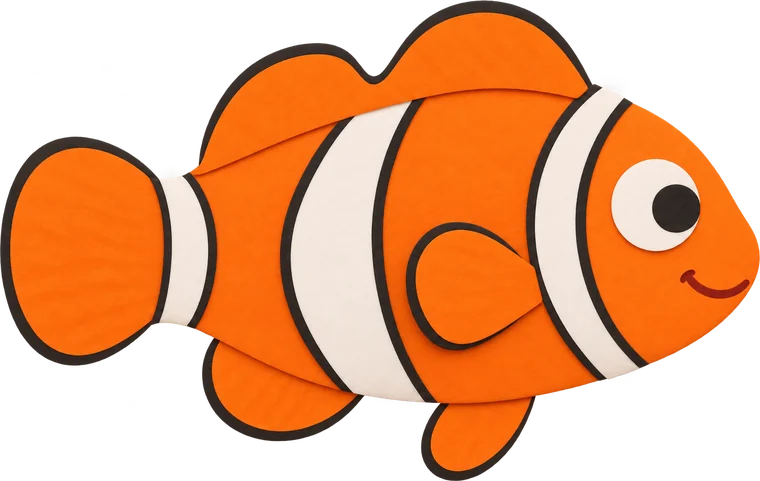
At the aquarium, a child watches an orange fish slip in and out of a waving anemone and asks, "Why is it hiding in there? Doesn't it hurt?"
The clownfish is a small fish that lives among an anemone's stinging tentacles. A coat of mucus keeps it from being stung, and fish and anemone help each other. The father guards the eggs, and a male can even turn into a female. Below are the questions children ask most, with answers at their level, ready to read aloud.
Fact cardClownfish Sea animal · fish
- Length
- about 8-11 cm (3-4 in)
- Pattern
- orange with three white bands
- Home
- among the tentacles of a sea anemone
- Kinds
- about 30 species
- Where
- warm, shallow Indian and Pacific Ocean waters
- Lifespan
- about 6-10 years in the wild
- The orange striped fish that lives in an anemone
Clownfish in a child's words
- A clownfish is a small orange fish with white bands. Even grown up it is only about 8-11 cm (3-4 in) long, about the length of a grown-up's finger.
- It makes its home in a sea anemone. The anemone's tentacles sting other fish, but not the clownfish.
- Its body is coated with slippery mucus, which keeps it safe among the stinging tentacles.
- Clownfish and anemones help each other: the anemone protects the fish, and the fish keeps the anemone clean and chases away intruders.
- Every clownfish grows up male. The biggest fish in the group is the female, and if she disappears, her male partner turns into a female.
- The father looks after the eggs, fanning fresh water over them with his fins. After about a week the babies hatch.
Clownfish: measure it with your own height
When your child asks, answer like this
 Why doesn't the anemone sting the clownfish?

What does a clownfish do for its anemone?
Can a clownfish really change from male to female?
Who looks after clownfish eggs?
Where do clownfish live?
Does a clownfish swim far from home?
What does a clownfish eat?
Clownfish facts that make kids say “Wow!”
- A mother clownfish lays roughly 100 to 1,000 eggs at a time.
- A clownfish group lives in size order: the biggest fish is the mother, the second biggest the father.
- Newly hatched clownfish drift in the open water for about a week or so, then find an anemone of their own and settle down.
A quiz to do together
Tap an answer.
Where does a clownfish hide and live?
Who mostly looks after clownfish eggs?
How many white bands does a clownfish have?
You finished the quiz! Well done.
Colouring page
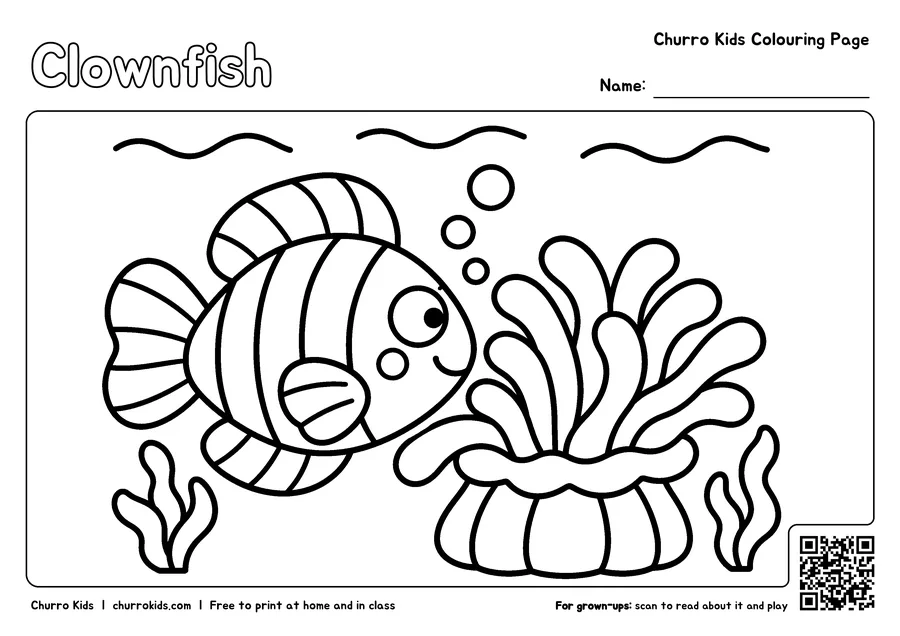
One A4 page, and it is free. Print it freely at home or in class.
Good for parents to know
- Sources count about 28 to 30 or so species. This page uses the most familiar one, the orange clownfish with three white bands (Amphiprion ocellaris); other kinds have different colours or numbers of bands. Strictly, the Korean name 흰동가리 belongs to a related species (Amphiprion clarkii), but Koreans commonly use it for the whole group.
- How the protective mucus works is not fully understood; it is usually explained as building up through repeated gentle contact with the anemone. "The mucus helps protect it" is a careful way to put it.
- Clownfish are among the most popular marine aquarium fish, and over-collecting has reduced them in some places. At the aquarium you might talk about leaving sea friends in the sea.
Things to try together
- Cut a fish from orange paper and stick on three white bands. Glue on strands of yarn to make its anemone home.
- A parent plays the clownfish dad, fanning imaginary eggs with their hands. It makes the fact easy to remember.
- Line the family up in height order and talk about how a clownfish group is ordered from the biggest fish down.