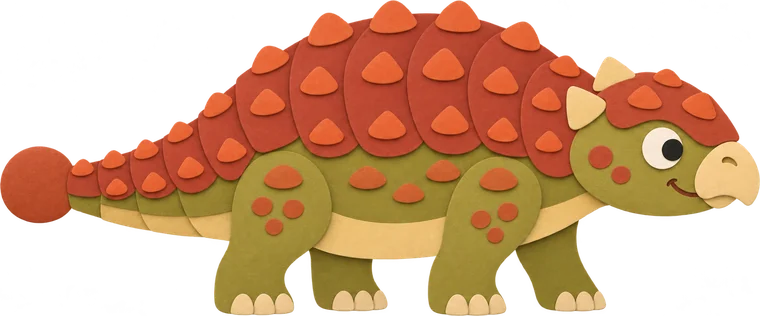
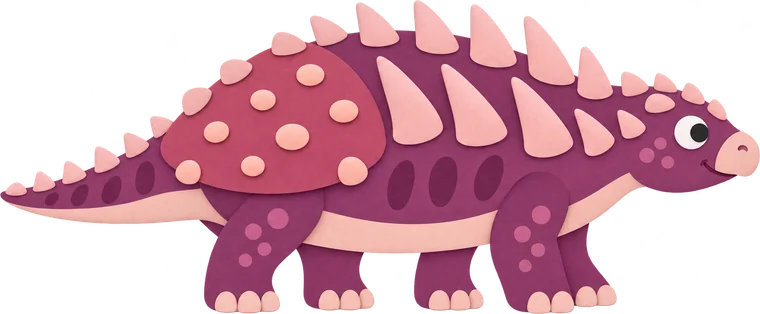
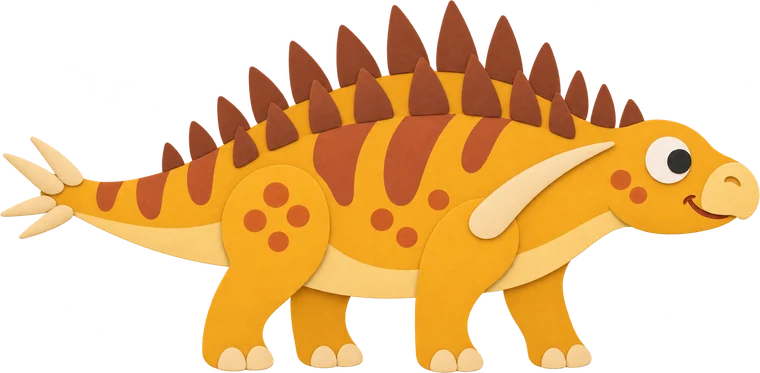
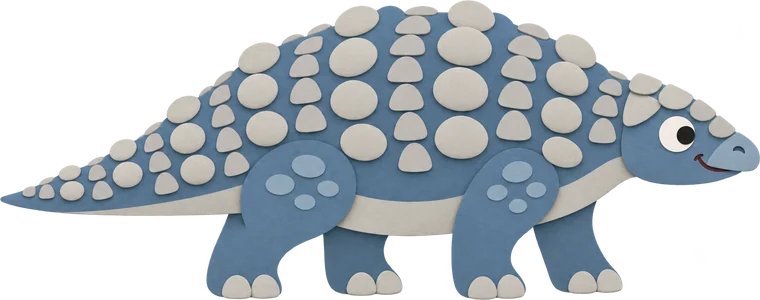
"Dad, is this one the little brother of Stegosaurus?" your child asks after spotting a small dinosaur with lots of spikes in a book. It is time to meet Kentrosaurus, a relative of Stegosaurus.
Kentrosaurus was a plated dinosaur that lived in the Late Jurassic in what is now Tanzania in Africa. It was about 4.5 m (15 ft) long, about as long as a car. It had small plates on the front of its back, and long, sharp spikes from its hips to its tail. Scientists have worked out that the tip of its tail probably moved at about 50 km (about 30 miles) an hour. Below are the questions children ask most, with answers at a child's level. You can read them out loud as they are.
Fact cardKentrosaurus
- Name means
- sharp-spike lizard
- Lived
- Late Jurassic (about 152 million years ago)
- Length
- about 4.5 m (15 ft)
- Weight
- about 0.7 to 1.6 tonnes
- Food
- Plant-eater
- Found in
- Africa (Tanzania)
- Group
- Armoured and plated dinosaurs
- Small plates on the front of its back
- Long spikes from its hips to its tail
- Sharp spikes on its shoulders
How big was Kentrosaurus? Measure it with your own height
When your child asks, answer like this
 What does Kentrosaurus mean?

How big was it?
What did it eat?
What did it do when a scary dinosaur came?
Who lived with it?
- Veterupristisaurus predatorsame time and place
This was a big meat-eating dinosaur that lived in the same place. If it hunted Kentrosaurus, it probably had to be careful not to get hit by the spiky tail. - Giraffatitan neighboursame time and place
Giraffatitan, with its neck held high like a giraffe's, lived on the same land too. Giraffatitan ate leaves from the tops of tall trees and Kentrosaurus ate low leaves, so they probably did not quarrel. - Dysalotosaurus neighboursame time and place
Dysalotosaurus, a small plant-eating dinosaur that ran fast on two legs, lived in the same place too. The two probably ate low plants close to each other.
When and where did it live?
What was it like as a baby? Did it live with friends?
Are there dinosaurs that look like it?
Who found it first?
Kentrosaurus facts that make kids say “Wow!”
- Kentrosaurus is a relative of Stegosaurus, but its body is smaller and it has many more sharp spikes.
- Many of the Kentrosaurus bones kept in a German museum were broken during the war.
- Pieces of a skull that people thought were lost were later found again in a drawer in the museum basement.
- The Natural History Museum in Berlin, Germany, has a Kentrosaurus skeleton that was first put up in 1925. In 2007 it was put up again in a slightly different pose.
From head to tail
- On some spikes the bone alone was 73 cm (29 inches) long, as long as a grown-up's arm.
- On its back there were about fifteen pairs of plates and spikes in two rows.
- It weighed about 700 to 1600 kg (about 1,500 to 3,500 lb), as heavy as one or two big cows.
- The biggest thigh bone was about 66 cm (26 inches) long.
A Kentrosaurus story to read aloud
Morning comes to the plain close to the sea. Kentrosaurus lowers its small head and snips off ferns with its beak. When it wants leaves from higher up, it stands on its back legs and stretches its neck. Beside it, a Giraffatitan with its neck held high is eating leaves from the treetops. A small Dysalotosaurus trots past on two legs. When a meat-eating dinosaur comes near, Kentrosaurus swishes its spiky tail from side to side. Thanks to its sharp spikes, it reaches the evening safely once again.
A quiz to do together
Tap an answer.
On which continent was Kentrosaurus found?
What runs from the hips to the tail of Kentrosaurus?
Whose relative is Kentrosaurus?
You finished the quiz! Well done.
Colouring page
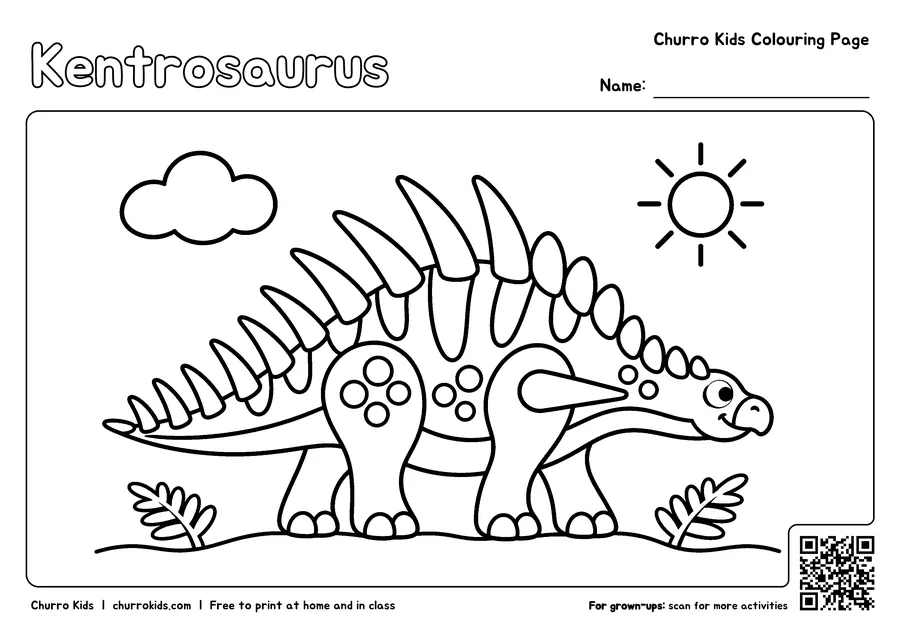
One A4 page, and it is free. Print it freely at home or in class.
Good for parents to know
- It is not certain if the pair of big spikes that stuck out sideways sat on the shoulders or on the hips. Many recent pictures put them on the shoulders, but books may differ.
- It is easy to mix up with Stegosaurus. Kentrosaurus is much smaller, and on the back part of its body and its tail it has long, sharp spikes in place of wide, flat plates.
- Fossils of about fifty animals came from one place, but they were not buried all at once, so we still do not know if it lived in herds. There is also no fossil evidence that Veterupristisaurus hunted Kentrosaurus, so it is safest to say "they lived in the same place."