Stories · Animal Friends · Land and sea animal
Polar Bear Facts for Kids: Why White Fur and Black Skin? Answers to Your Child's Questions
· Churro Kids
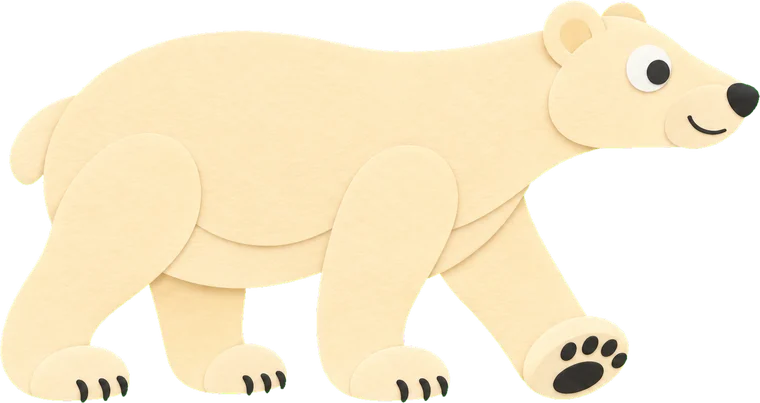
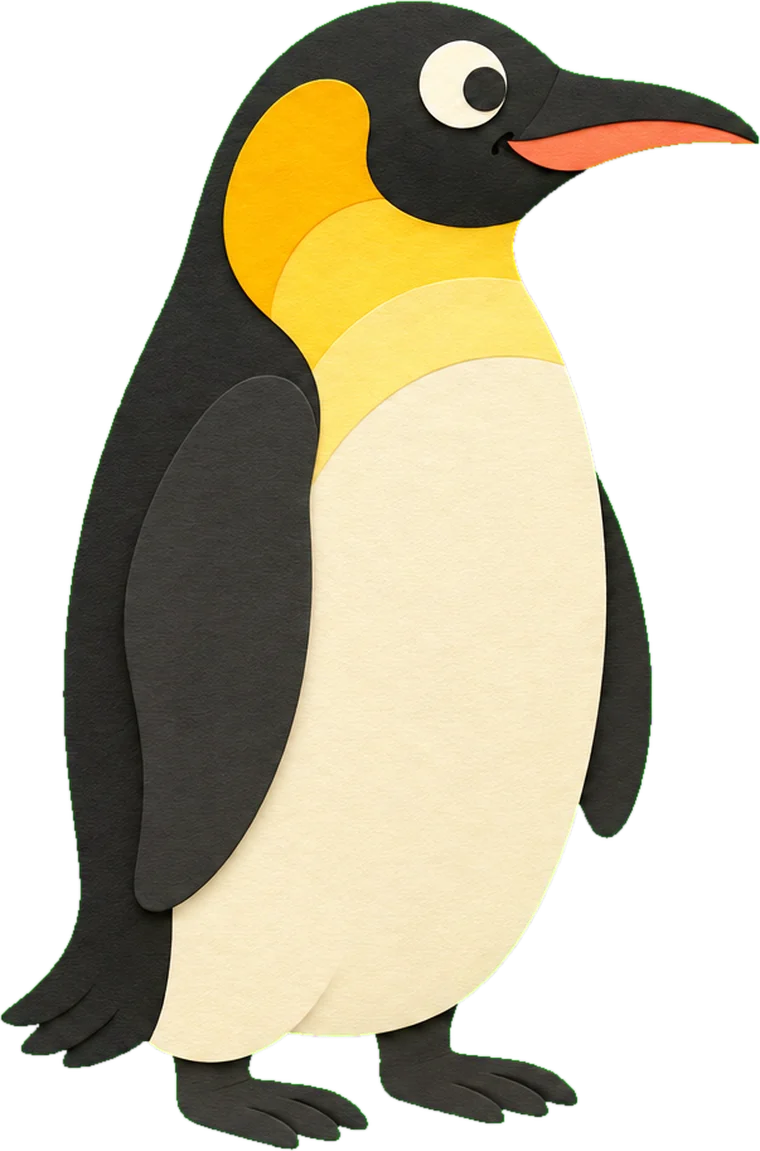
Looking at a picture book where a polar bear and a penguin share a sledge, your child asks, "Are polar bears and penguins friends?"
Polar bears live on the sea ice of the Arctic, at the top of the world. A male is over 2 m (6.5 ft) long and weighs roughly 350 to 600 kg. The fur that looks white is really see-through, and the skin underneath is black. Penguins live at the other end of the Earth, so the two never meet. Below are the questions children ask most, with answers you can read aloud as they are.
Fact cardPolar Bear Land and sea animal · bear
- Body length
- males about 2-2.5 m (6.5-8 ft)
- Weight
- males about 350-600 kg (770-1,300 lb)
- Home
- on the sea ice of the Arctic
- Food
- mostly seals
- Skin colour
- black
- Newborn cub
- about 500-700 g (1-1.5 lb)
- The bear with black skin under its white coat
Polar Bear in a child's words
- Polar bears live in the Arctic, the very cold region at the top of the Earth.
- A male is about 2 to 2.5 m (6.5 to 8 ft) long and weighs about 350 to 600 kg (770 to 1,300 lb). Females are about half that weight.
- The fur looks white, but each hair is colourless and see-through. Light scatters in the hairs and makes them look white.
- Under the fur the skin is black. So are the nose and lips.
- Under the skin is a layer of fat about 5 to 10 cm (2 to 4 in) thick, which keeps the bear warm even in icy water.
- Polar bears are strong swimmers. Swims of more than 100 km (60 miles) without rest have been recorded.
- A newborn cub weighs only about 500 to 700 g (1 to 1.5 lb), about as much as a small bottle of water.
Polar Bear: measure it with your own height
When your child asks, answer like this
 Why are polar bears white?

What colour is a polar bear's skin?
Don't polar bears get cold?
Do polar bears and penguins live together?
What do polar bears eat?
Do polar bears hibernate?
Do polar bears have a good sense of smell?
Polar Bear facts that make kids say “Wow!”
- Although it walks on land and ice, the polar bear is often classed as a marine mammal because it depends on the sea and sea ice.
- Fur grows on the soles of its paws, for grip on the ice and warm feet.
- A cub is born at 500 to 700 g, but a grown male ends up hundreds of times heavier.
A quiz to do together
Tap an answer.
What colour is a polar bear's skin?
Do polar bears and penguins live in the same place?
What do polar bears mostly eat?
You finished the quiz! Well done.
Colouring page
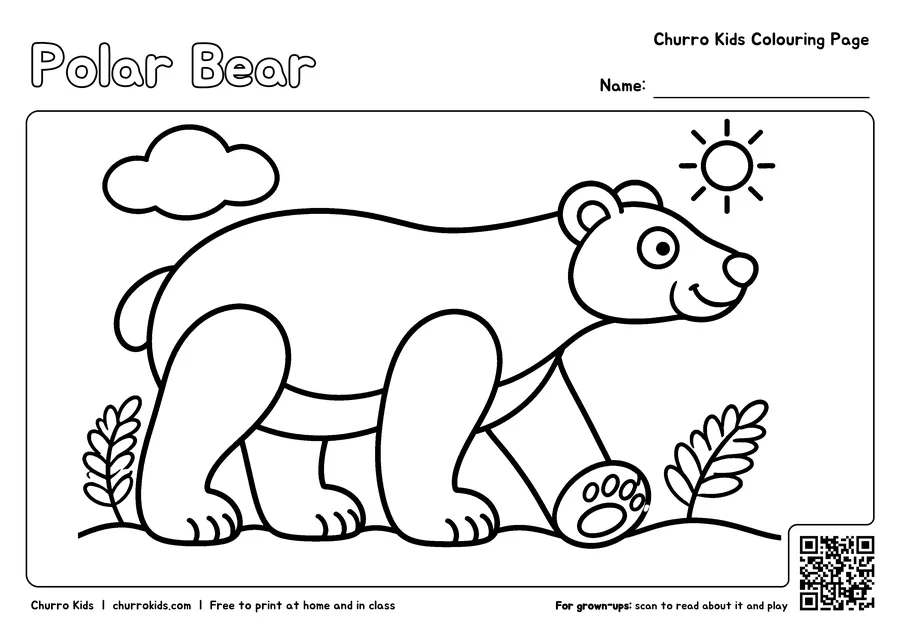
One A4 page, and it is free. Print it freely at home or in class.
Good for parents to know
- Picture books often put polar bears and penguins together, but they never meet: polar bears live in the Arctic and penguins in the Southern Hemisphere. Point to the top and bottom of a globe.
- The popular claim that a polar bear can smell a seal 32 km (20 miles) away is not a measured value. Weights also vary by source, with very large males said to reach 800 kg.
- Less sea ice makes it harder for polar bears to find food. If your child worries, try: "That is why people are working to save energy and keep the Earth cool."
Things to try together
- Find the Arctic and Antarctica on a globe or map and put a polar bear sticker on one and a penguin sticker on the other.
- With a grown-up: dip one bare hand and one hand wrapped in a plastic glove with a thick layer of butter or cooking fat briefly into iced water. You can feel why a fat layer keeps a bear warm.
- Bundle several clear drinking straws together. Each is see-through, but the bundle looks white, just like polar bear fur.