
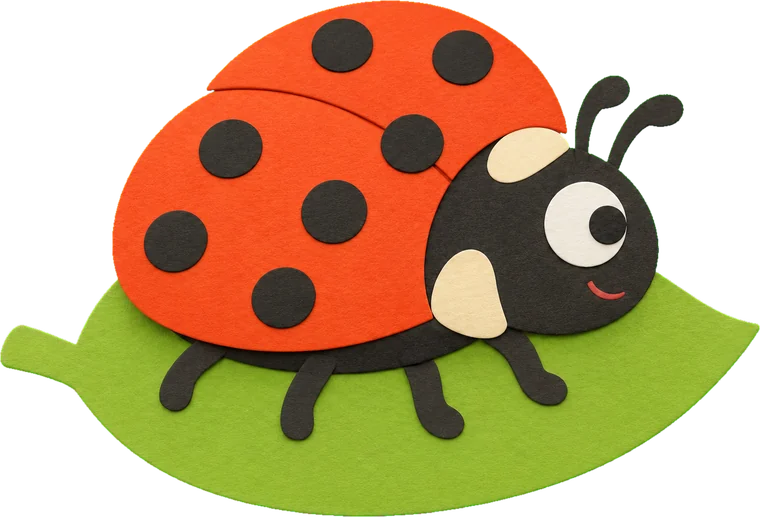
Ladybug coloring page
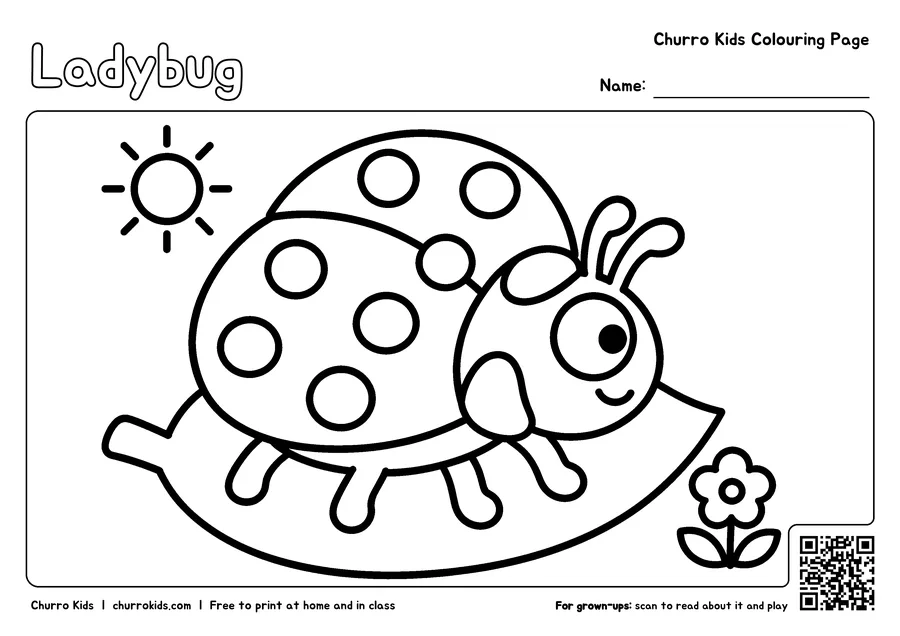
One A4 page, and it is free. Print it freely at home or in class.
Ladybug stand-up paper figure (color, cut and fold)
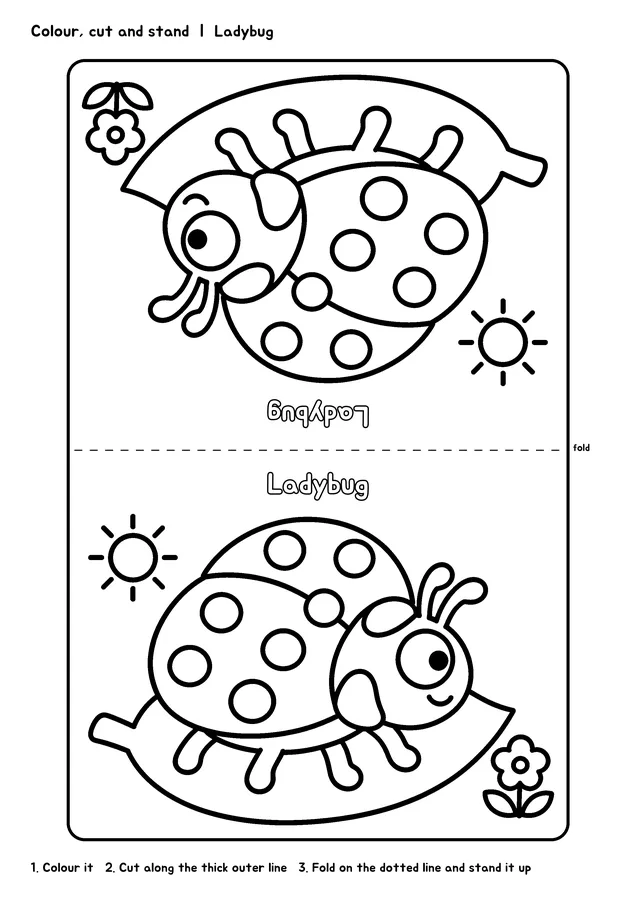
- Color it.
- Cut along the thick outer line.
- Fold on the dotted line in the middle and stand it up.
This is not origami from a square of paper. It is a simple figure you print on A4, color, cut out and fold in half so that it stands.
Ladybug line tracing (ages 2–4)
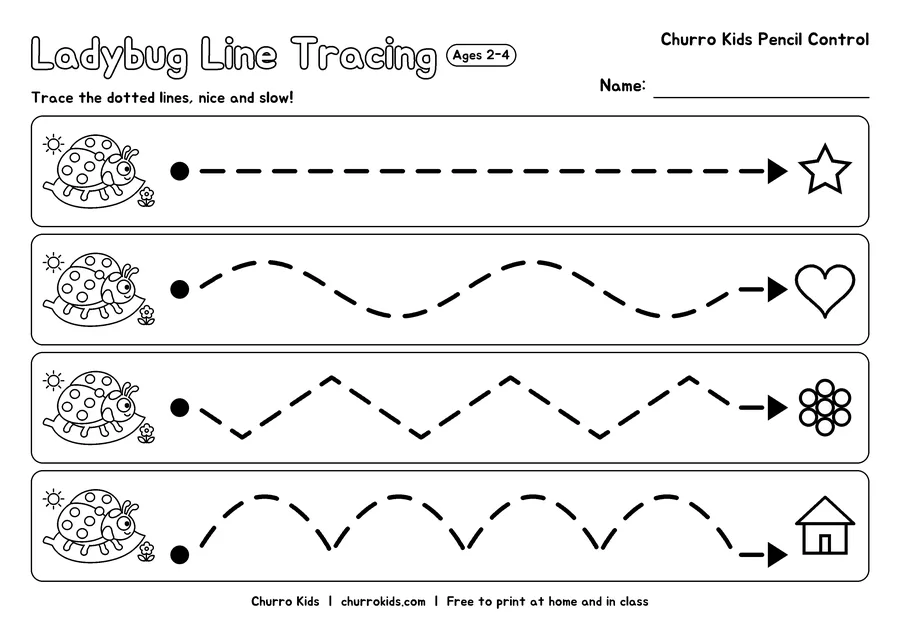
Trace the thick dotted lines slowly: a straight line, a wave, a zigzag and hills. Made for ages 2–4.
Ladybug scissor practice (ages 2–4)
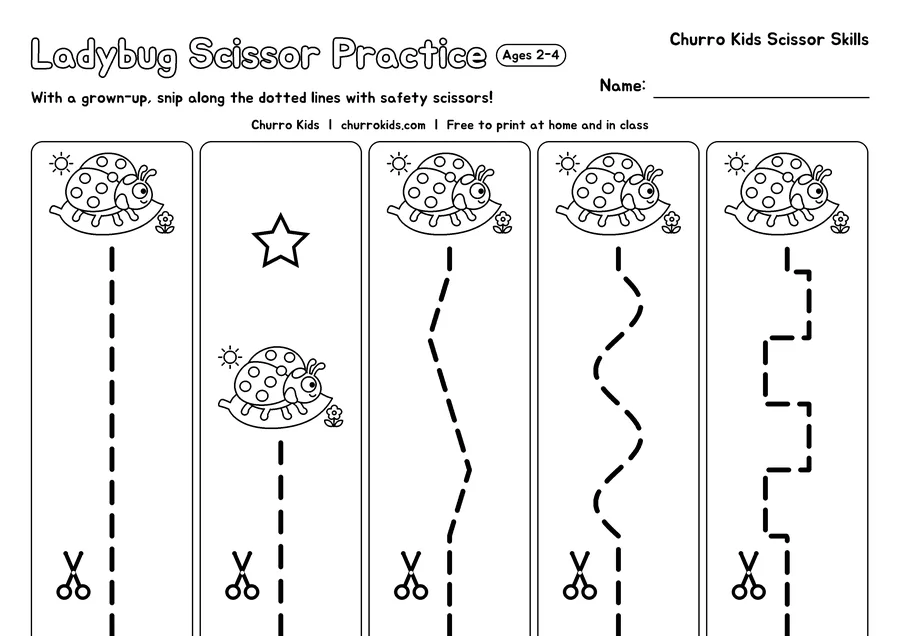
Snip along the thick dotted lines from the bottom edge of the paper up to the picture: a straight line, a short line, a zigzag, a wave and steps. Use safety scissors, with a grown-up. Made for ages 2–4.
Ladybug picture matching (ages 3–5)
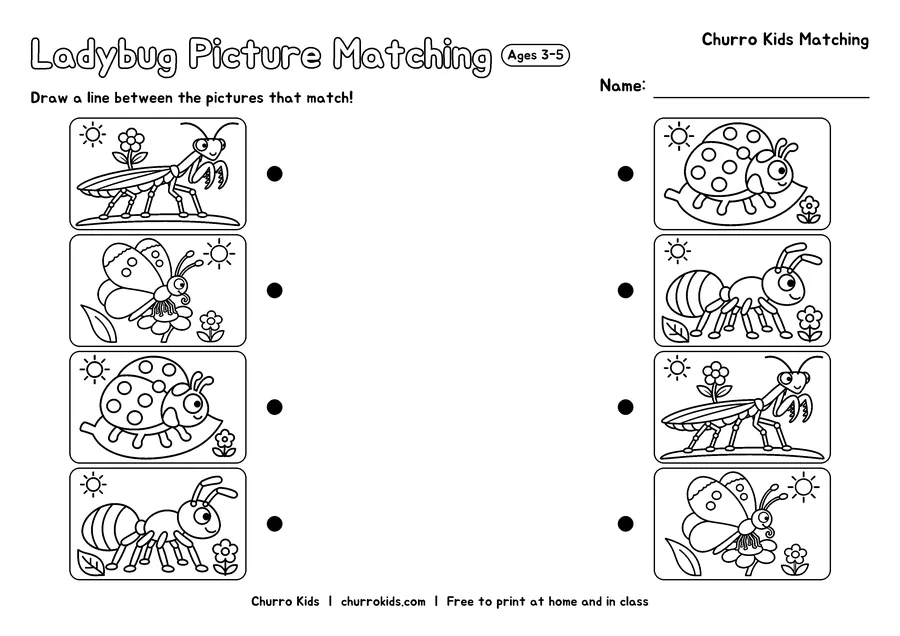
Find the same picture on the left and on the right, and join the two with a line. Made for ages 3–5.
Ladybug picture puzzle (ages 3–5)
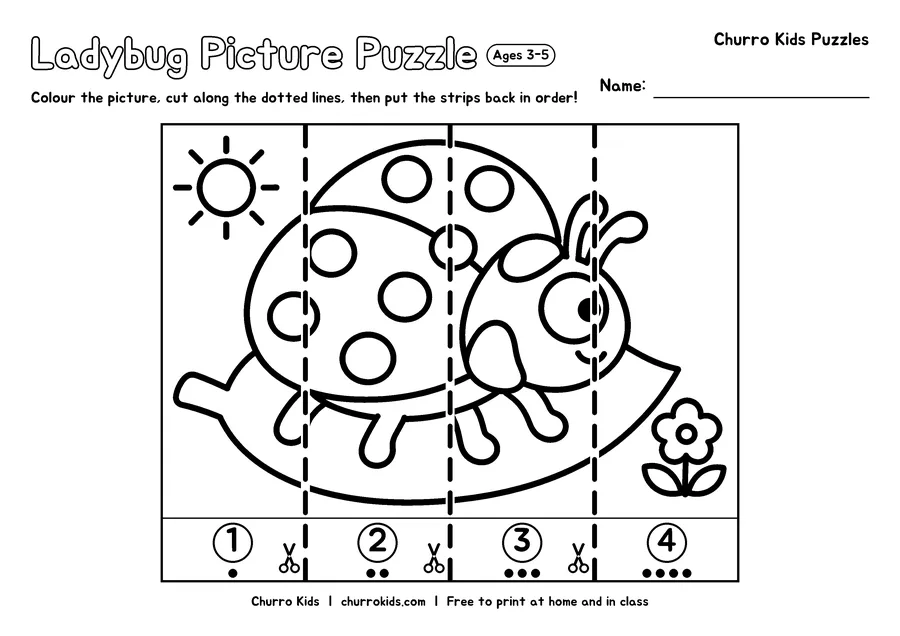
Colour the picture, cut along the dotted lines into four strips, then use the numbers and dots to put them back in order. Use scissors with a grown-up. Made for ages 3–5.
Ladybug counting (ages 3–5)
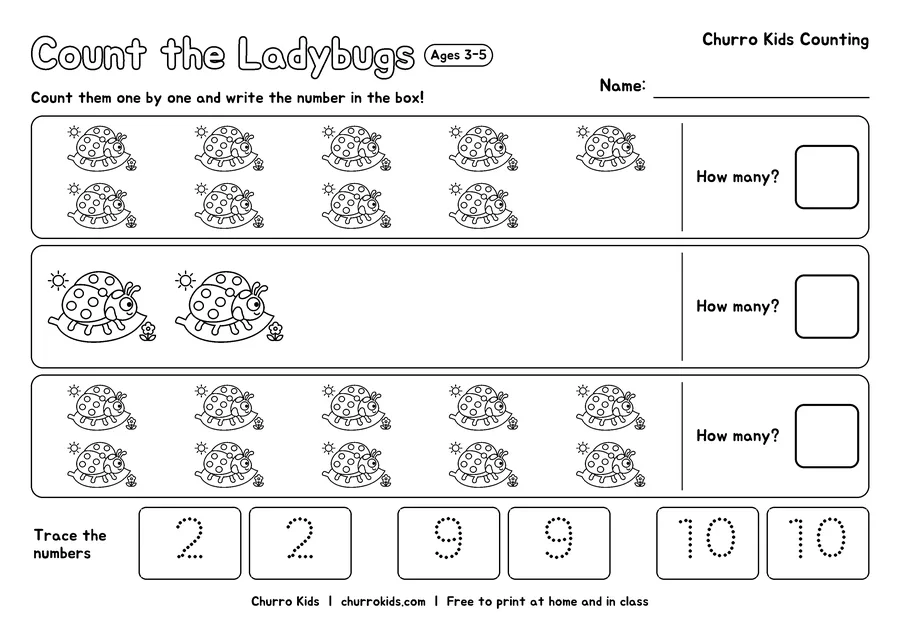
Count the pictures one by one, write the number in the box, then trace the dotted numbers below. Numbers 1 to 10. Made for ages 3–5.
Ladybug maze
-
Easy (ages 4–5)
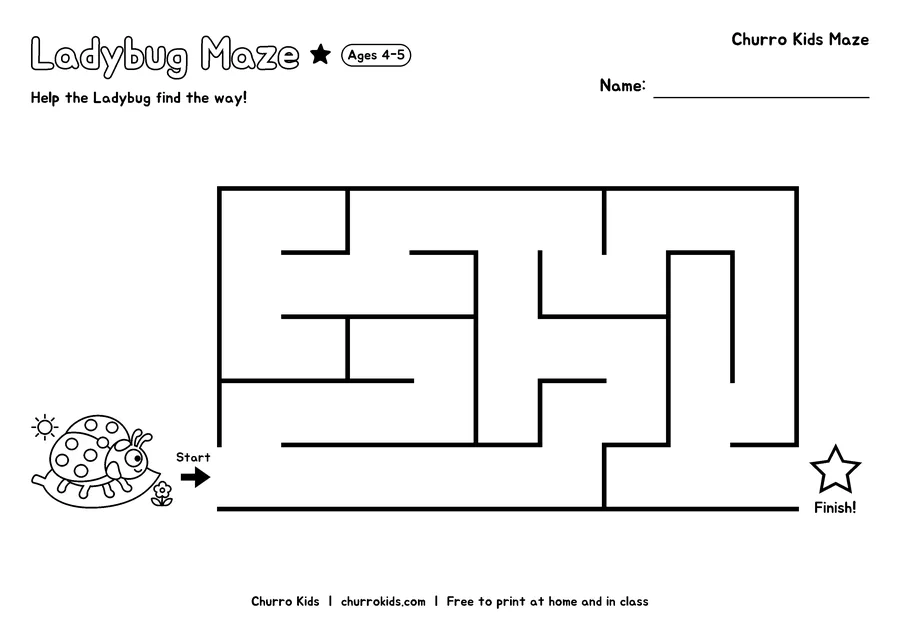 Get the easy maze (PDF)
-
Challenge (ages 6–7)
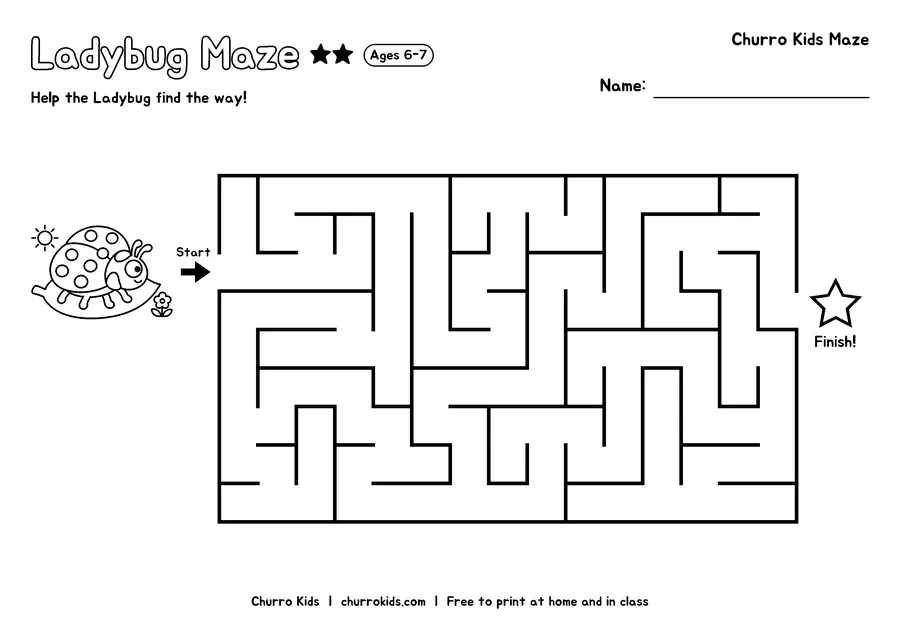 Get the challenge maze (PDF)
Find the way from start to finish with a pencil. Easy is made for ages 4–5, Challenge for ages 6–7.
Trace the name: Ladybug
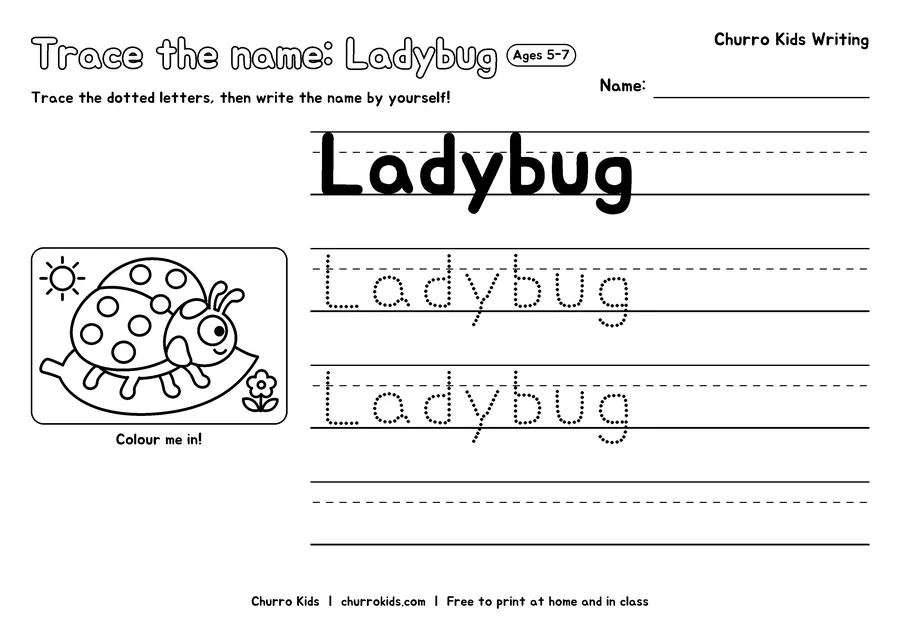
Trace the dotted letters, then write the name by yourself on the last line.
Things to talk about while you draw
- A seven-spot ladybug has seven black spots on its red wing covers and is about 5-8 mm long, the size of a pea.
- Ladybugs eat aphids, tiny bugs that suck the juice out of plants.
- Both adults and young eat aphids: one ladybug is said to eat about 5,000 in its lifetime.
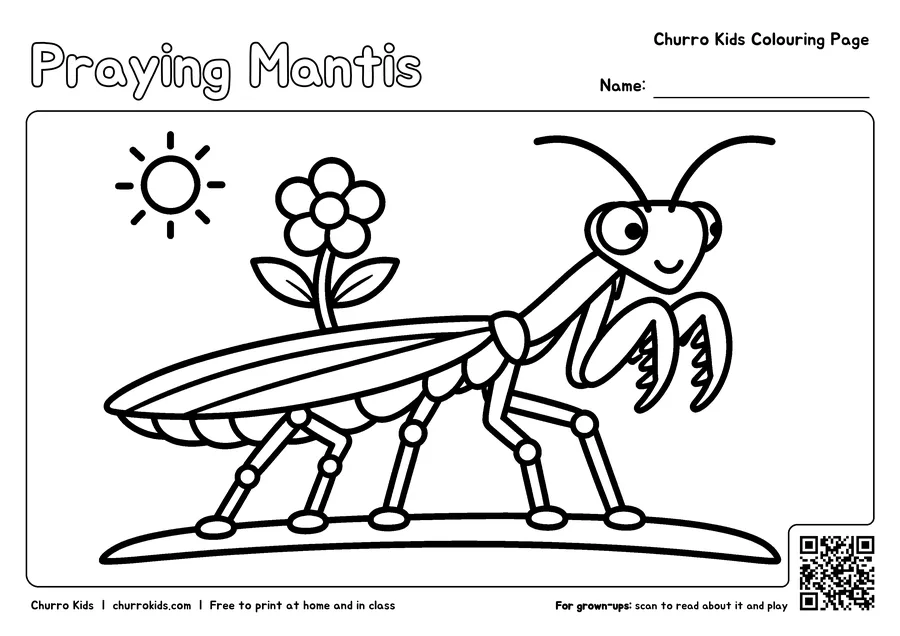 Praying Mantis
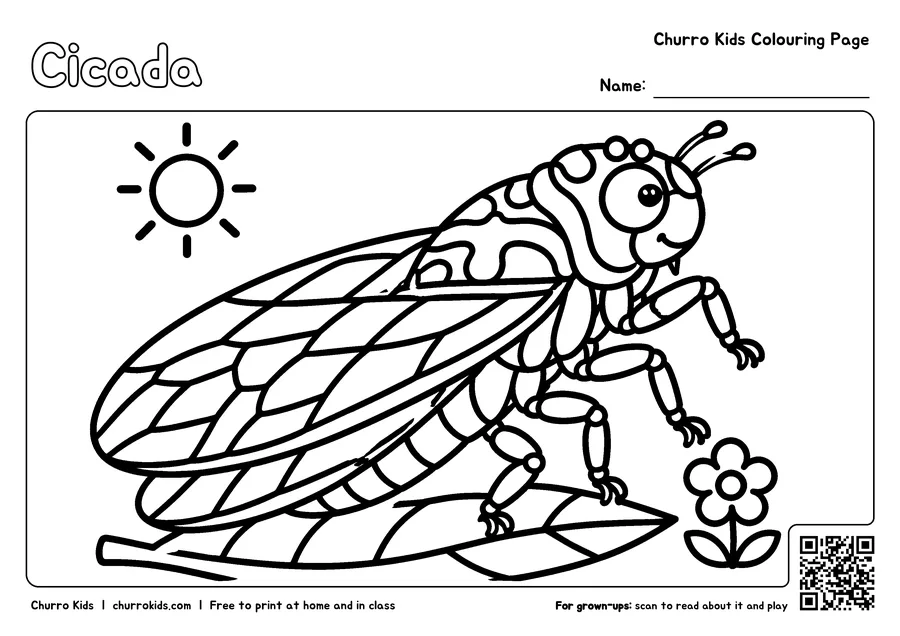 Cicada
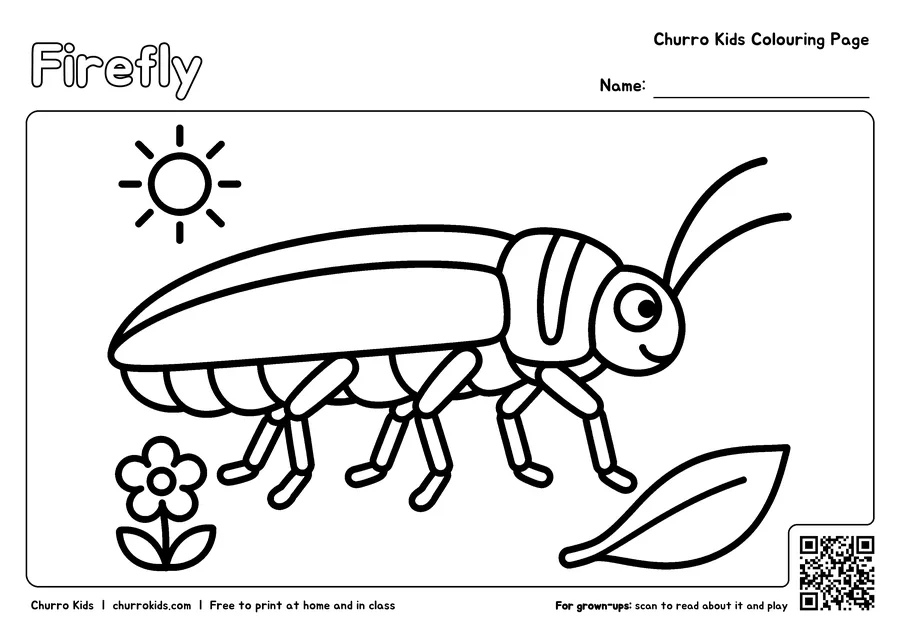 Firefly
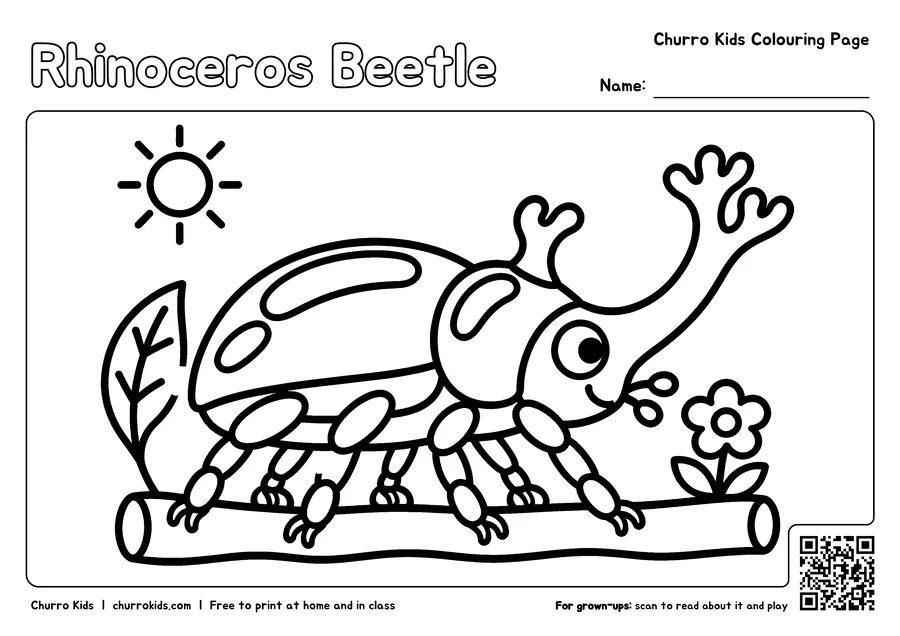 Rhinoceros Beetle