Stories · Animal Friends · Tree-dwelling animal
Sloth Facts for Kids: Why So Slow, and Do Sloths Really Sleep All Day? Answers to Your Child's Questions
· Churro Kids
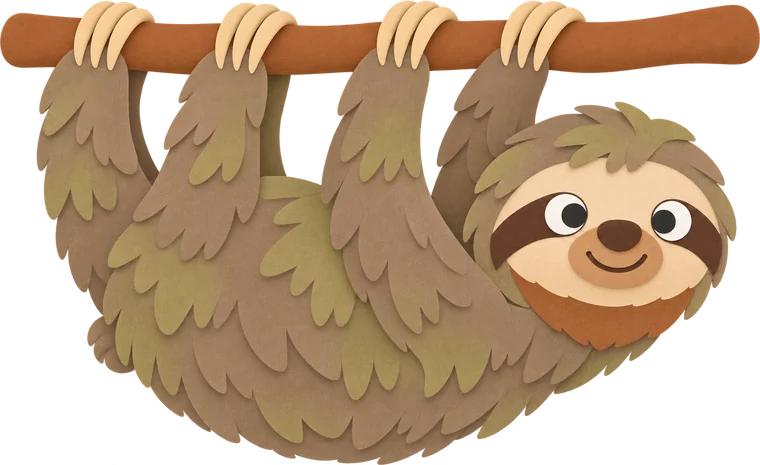
When you tease your dawdling child, "You're like a sloth this morning," they fire back, "Do sloths really sleep all day?"
Sloths spend their lives hanging upside down in the treetops. They eat leaves, which give little energy, so they move very slowly and climb down only about once a week. Yet one study of wild sloths found they slept less than people think, and they are excellent swimmers. Below are the questions children ask most, with answers you can read aloud as they are.
Fact cardThree-toed Sloth Tree-dwelling animal · sloth
- Length
- about 45-75 cm (18-30 in)
- Weight
- about 3-6 kg (7-13 lb)
- Front claws
- 3 long hooked claws
- Home
- tropical forests of Central and South America
- Food
- leaves
- Toilet trips
- about once a week
- The slowpoke that lives upside down in the forest
Three-toed Sloth in a child's words
- A sloth spends most of its day hanging upside down from a branch. It eats, sleeps and even gives birth up in the trees.
- This page is about the three-toed sloth, which has three claws on each front foot. Two-toed sloths have two.
- A three-toed sloth is about 45 to 75 cm (18 to 30 in) long and weighs about 3 to 6 kg (7 to 13 lb), roughly the size of a pet cat.
- Sloths are among the slowest-moving animals on Earth. Their bodies run on very little energy, so they take things slowly.
- They eat leaves, which take a very long time to digest, so they climb down only about once a week to go to the toilet.
- Tiny green algae grow in their fur, giving it a greenish tint that helps them hide among the leaves.
- A three-toed sloth can turn its head about 270 degrees, looking behind itself without moving its body.
Three-toed Sloth: measure it with your own height
When your child asks, answer like this
 Why is a sloth so slow?

Do sloths sleep all day?
Why does a sloth hang upside down?
Why is a sloth's fur green?
Can sloths swim?
Why does a sloth look like it is smiling?
Where does a baby sloth stay?
Three-toed Sloth facts that make kids say “Wow!”
- A sloth climbs down about once a week for a toilet trip, and can lose up to a third of its body weight in one go.
- Three-toed sloths have more neck bones than most mammals (which have seven), which is how they can turn their heads about 270 degrees.
- Digesting a single leaf can take from about a week to more than a month.
A quiz to do together
Tap an answer.
How often does a sloth go to the toilet?
Can a sloth swim?
Why does a sloth's fur look green?
You finished the quiz! Well done.
Colouring page
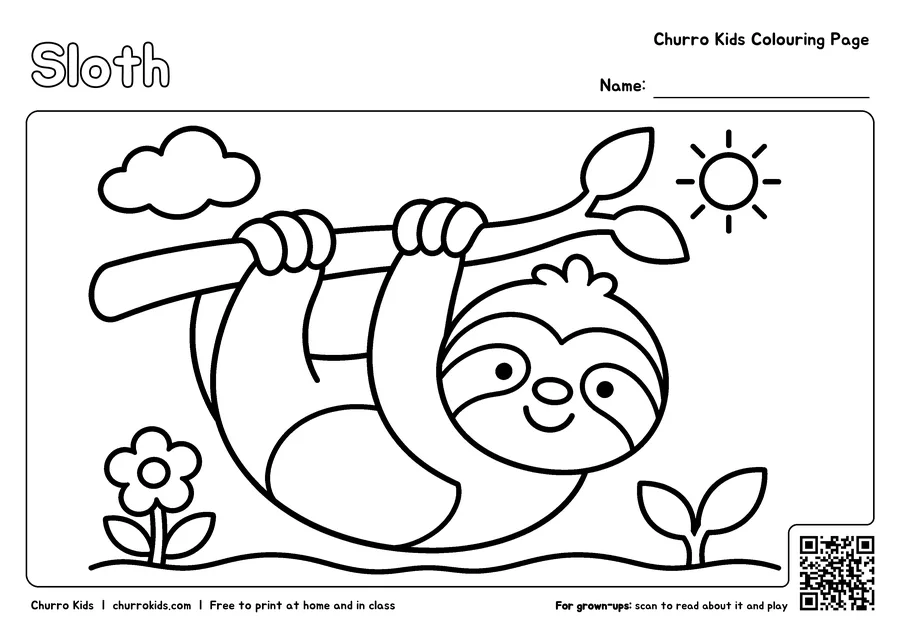
One A4 page, and it is free. Print it freely at home or in class.
Good for parents to know
- "Sloths sleep 20 hours a day" is mostly based on zoo animals. A 2008 study that recorded brain activity in three wild sloths in Panama measured about 9.6 hours a day; that is a very small sample.
- Lifespan and digestion time vary widely between sources. "A very long time" is the safe version.
- Sloths look cuddly, but they are not pets. They belong in the rainforest.
Things to try together
- With an adult holding on, let your child hang briefly from a sturdy bar. That is how a sloth spends its day.
- Play "sloth walk": who can cross the room most slowly? Going fast loses.
- See how far your child can turn their head to look behind, then compare with the sloth's 270 degrees.
Sources
- nationalzoo.si.edu/node/11358
- slothconservation.org/blog/10-incredible-facts-about-the-sloth
- ifaw.org/animals/sloths
- animaldiversity.org/accounts/bradypus_variegatus
- xenarthrans.org/species/sloths/brown-throated-three-toed-sloth/
- mpg.de/567312/pressRelease20080521
- en.wikipedia.org/wiki/Brown-throated_sloth