Stories · Animal Friends · Pet
Dog Facts for Kids: Why Do Dogs Pant, and Can They See Colours? Answers to Your Child's Questions
· Churro Kids
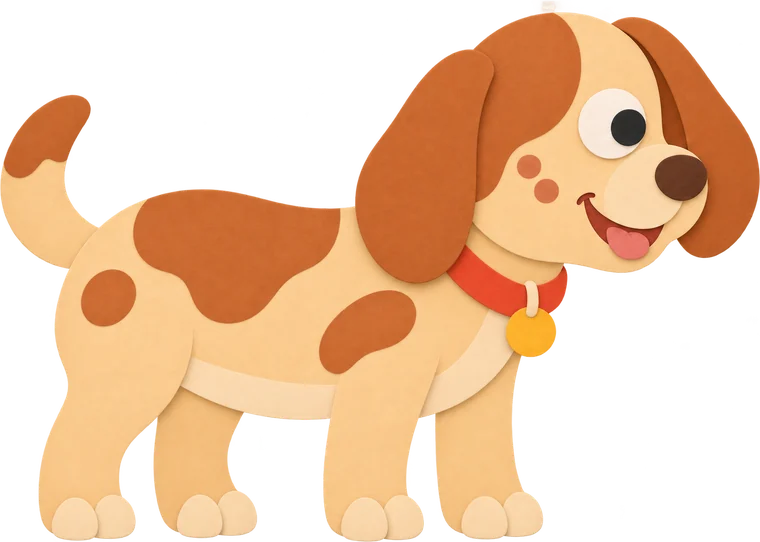
On a walk, the dog flops down with its tongue hanging out, panting hard, and your child asks anxiously, "Is the dog ill? Why is it breathing like that?"
Dogs began as wolves long ago and have lived alongside people for more than 14,000 years. They read the world through their noses, see blue and yellow well, and cool off by panting. Below are the questions children ask most, with answers you can read aloud as they are.
Fact cardDog Pet · dog
- Ancestor
- wolves of long ago
- With people for
- more than 14,000 years
- Smell receptors
- about 40-50 times as many as ours
- Colours seen best
- blue and yellow
- Teeth
- 28 as a puppy, 42 as an adult
- Eyes open
- at about 2 weeks old
- Our oldest animal friend, who reads the world with its nose
Dog in a child's words
- Dogs descend from wolves that lived long ago, and they have shared our lives for more than 14,000 years.
- A dog's nose has about 40 to 50 times as many smell receptors as ours, so dogs get to know the world through scent.
- Dogs do not see in black and white. They see blue and yellow well but find red and green hard to tell apart.
- Dogs hardly sweat. A little sweat comes from their paw pads, but mostly they cool down by panting with their tongues out.
- Puppies are born with their eyes closed. At about two weeks old their eyes and ears open.
- A puppy has 28 baby teeth. As it grows they fall out and 42 adult teeth come in.
When your child asks, answer like this
 Why does a dog hang its tongue out and pant?

Can dogs see colours?
Why is my dog always sniffing?
Does a wagging tail mean the dog is happy?
Can I pat a dog I don't know?
Are puppies born with their eyes open?
Do puppies lose their teeth?
Dog facts that make kids say “Wow!”
- A dog's nose can hold up to about 300 million smell receptors. We have about 6 million.
- Dogs don't sweat over most of their bodies; their sweat comes out through their paw pads.
- Throw a red ball onto green grass and a dog may struggle to spot it: to a dog, red and green look alike.
A quiz to do together
Tap an answer.
How does a dog mainly cool down?
Which animal were dogs' ancestors?
What should you do first if you want to pat a dog you don't know?
You finished the quiz! Well done.
Colouring page
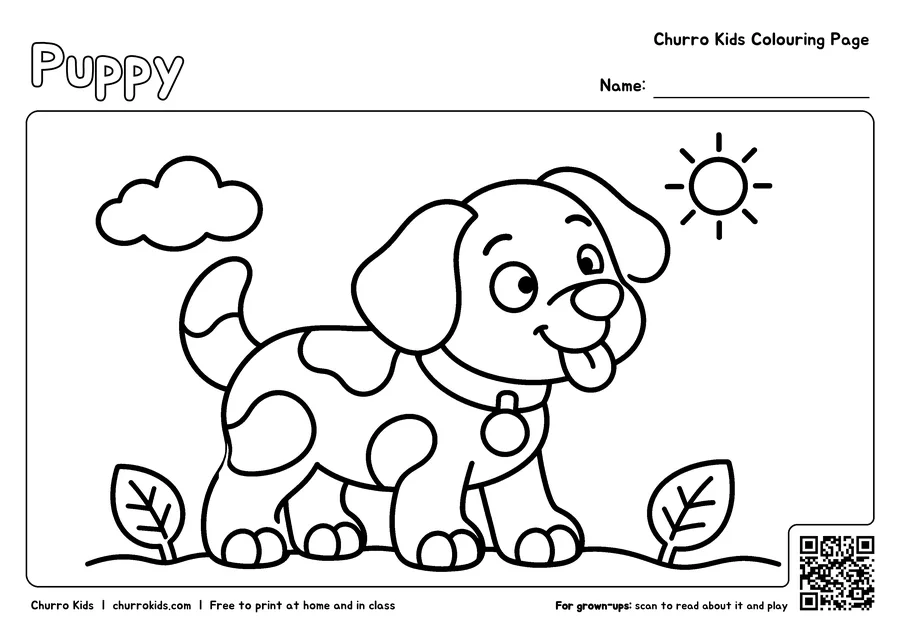
One A4 page, and it is free. Print it freely at home or in class.
Good for parents to know
- When and where dogs first joined people is still being researched. The oldest accepted dog remains are about 14,000 to 15,000 years old, and some genetic studies point further back, so this page simply says "more than 14,000 years".
- If children learn only that "a wagging tail means a happy dog", they can miss warning signs. Teach them not to approach a dog whose tail is stiff, whose body is tense, or who is growling.
- Korea's agriculture ministry also advises asking the owner's permission before approaching someone else's pet. Practise "ask, let it sniff, stroke gently" with your child, and wash hands afterwards.
Things to try together
- Hide a piece of orange peel in a room and let your child find it with eyes closed, by smell alone: a dog-detective game.
- Put a blue, a yellow and a red ball on a green blanket and talk about which ones a dog would spot most easily.
- With a toy dog, practise the greeting: ask the owner, let the dog sniff your hand, then stroke gently.
Sources
- firstvet.com/us/articles/how-good-is-a-dogs-sense-of-smell
- vcahospitals.com/know-your-pet/do-dogs-see-color
- akc.org/expert-advice/health/do-dogs-sweat/
- hillspet.com/dog-care/behavior-appearance/do-dogs-sweat
- petmd.com/dog/care/how-many-teeth-do-dogs-have-and-can-they-lose-them
- cdn.citl.illinois.edu/courses/ANSC207/week3/6_puppy_development/web_data/slides_and_notes.htm
- blackhawkpetcare.com/en/articles/when-do-puppies-open-their-eyes/
- vcahospitals.com/resources/behavior-dog/communication/what-your-dog-s-tail-is-saying
- vetstreet.com/our-pet-experts/surprisingly-common-ways-we-misinterpret-what-our-pets-are-telling-us
- kidshealth.org/en/kids/dogs.html
- mafra.go.kr/bbs/home/792/579409/artclView.do
- popsci.com/dogs-may-have-been-first-domesticated-in-central-asia/
- en.wikipedia.org/wiki/Dog